THANK YOU FOR YOUR REQUEST
We will be in touch soon.

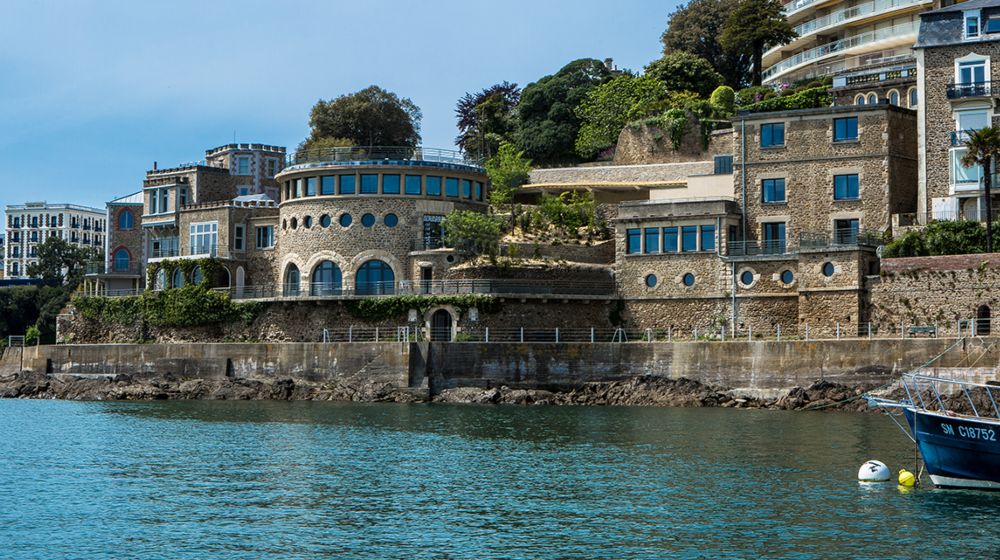
In the heart of such a glorious history-rich location, Hotel Castelbrac is set on a beautiful cliff top amongst the wild, dramatic coastline which characterises Brittany, France’s northwesternmost region. Let us take you on a tour of this unique hotel inspired by the sea and the different eras which compose its extensive history. Not many of us have ever found a place with an irrefutable imprint of serenity. BRABBU recently succeeded and became bewildered by the quiet atmosphere of paradise in the North of France.
This area not only offers remarkable historical sightseeing in its towns and villages but also an exceptional place to spend a lovely weekend nearby. This terrific destination is home to some of the finest prehistoric landmarks in the world and its proximity to the sea is conducive to tranquil reflection and meditation. The extraordinary beauty of this French coastline consists of many beaches, fishing villages, and islands.
See Also: Kempinksi Hotel Nanjing by Yang Bangsheng & Associates Group
The architectural backdrop is absolutely astonishing. It is said that when British Colonel Robert William Hamilton set eyes on it in 1872 he exclaimed, ‘What a bric-a-brac!’ due to the architectural layout of the villa, a composition of several mismatched buildings. However, the charm of this private mansion seduced the Crimean war hero and he bought it to be his own residence. Soon the transformations began with the aim of giving it the appearance of a British castle with an elevation, battlements, and stables overlooking the street. The English were avid naturalists and the Colonel installed large glasshouse in the garden that he called his ‘Greenhouses’.
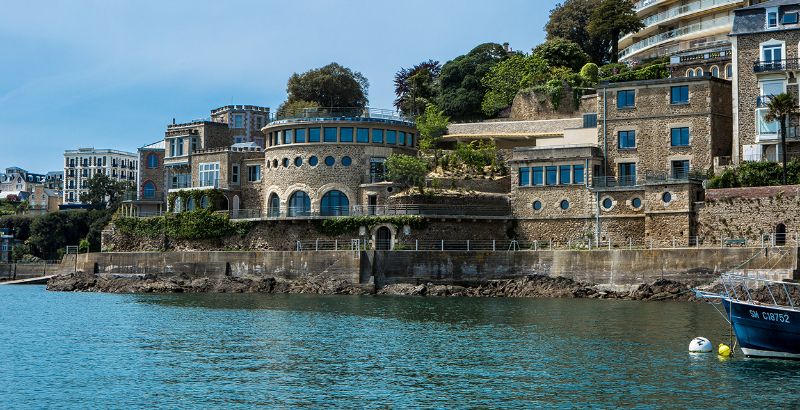
The colonel’s wife, Charlotte-Marie Hamilton, who is said to have been a very fashionable lady, immediately took charge of the interior. Her inspiration was the English movement ‘Arts and Crafts’, the equivalent of Art Nouveau in France while giving a feminine twist to the somewhat masculine architecture of the mansion. When designer Sandra Benhamou, in collaboration with interior designer Léonie Alma Mason, took on the project of transforming this hotel’s interior in 2012, they had the same challenge.
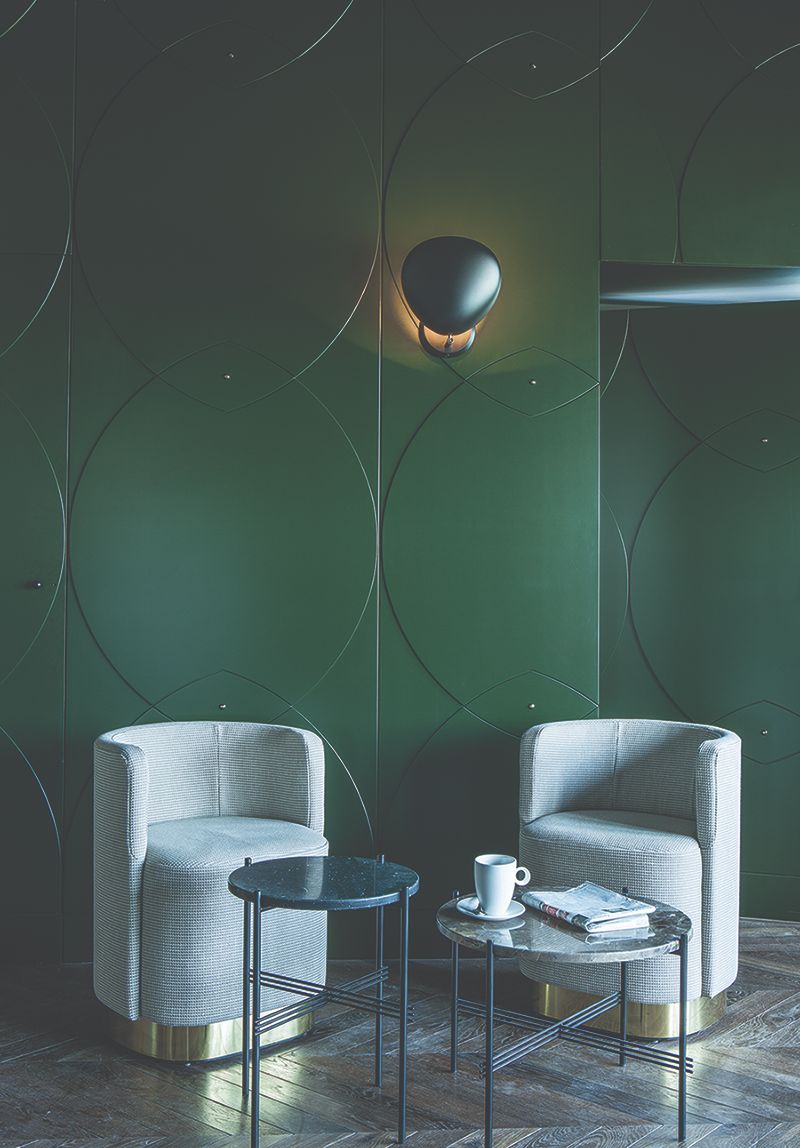

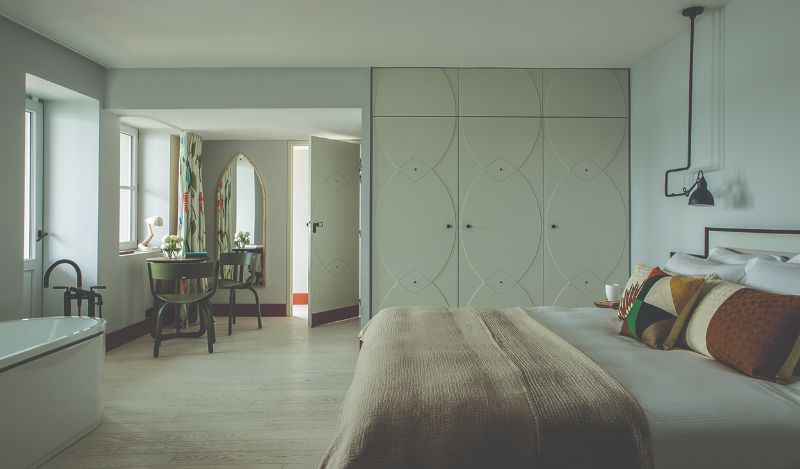
‘I wanted to create a warm atmosphere, a female lightness. Maybe this architecture has something masculine and I have brought femininity, gentleness’. The challenge was to keep the place authentic while ‘projecting it into modernity,’ says Sandra Benhamou, who refused to ‘fall into the trap of nostalgia’. She decided to keep the old character of certain elements (wooden ceilings, a fireplace, beautiful stairs), to redo others identically (woodwork, parquet floors) while bringing to everything a touch of ‘quiet sophistication and assumed eclecticism’.
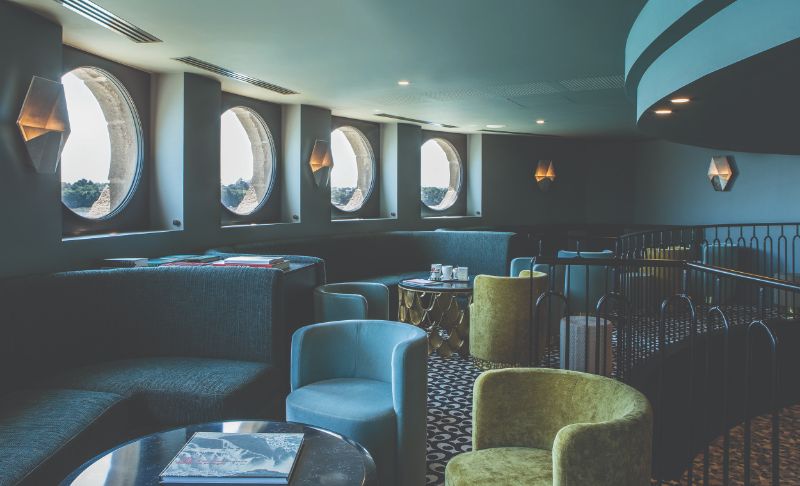
The inspiration was an art deco style mingled with the sea. Consequently, throughout the hotel, we see art deco projected in elements such as ironwork, the central staircase, and smaller details such as door handles, switches, faucets, headboards and frames. Léonie Alma Mason, a talented former student of Camondo, was able to provide a very open vision as a result of her many voyages and interest in contemporary art, set design, and photography. With a passion for ‘atypical detail’, Castelbrac allowed Léonie to find historical decorative elements within, such as caisson ceilings above the reception desk and woodwork arches above the entrance stairs. The spirit of the hotel’s reception is be marked by ‘kindness, expertise and serenity’.
See Also: Fettle and The Hoxton Portland Hotel Project

There are plenty of reasons why Castelbrac doesn’t look like a hotel, but rather a villa of the era, revisited in history, that we may dive into with delight. The reception is set on the original entrance of Castelbrac, which was discovered by chance during construction. After descending a flight of stairs we arrive at reception and immediately find a large room with original wooden ceilings opening to the sea through wide bay windows, where Sandra Benhamou’s aim was a ‘warm and cosy’ atmosphere in bottle-green woodwork, plaid fabrics, and houndstooth armchairs.

Access to the reading lounge on the lower floor is by a stairway lined with a custom-designed black metal railing. The vast room extends to a large terrace overlooking the sea and is the cosy heart of Castelbrac. This is an ideal place for reading, watching the sea, meditating, and where you can fully enjoy a place that will recharge the soul. A library in a dark wood, armchairs in antique pink and saffron velvet, ottomans and benches covered with tortoiseshell motif fabric from Le Manach, and curtains with palm patterns help create ‘an atmosphere conducive to serenity, relaxation, and conversation’.

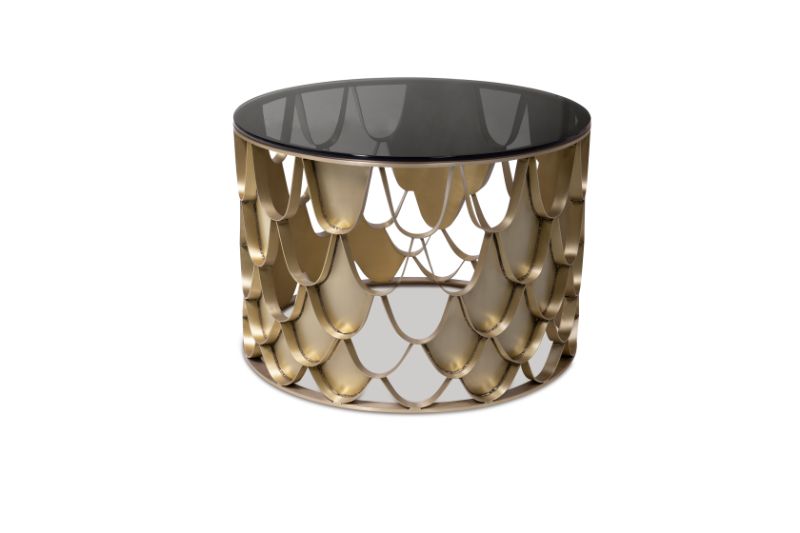
Further, a cosy restaurant with carefully chosen furniture is situated on the terrace, overhanging the sea and the Clare de Lune promenade. Close to that attractive spot, the ‘Aquarium bar’ was built within the former aquarium museum. The bar, lit by gold leaf suspension lamps, is glittery granite, dressed with wave patterns in metallic silver tones. The first peculiar object of its interior design is the KOI Cocktail Table from our brand, BRABBU.

Highly appreciated for its decorative purposes, the table possesses a recurring symbol of Japanese culture. These KOI scales on the sides of the tables shine and reflect, in the brass surface, the sun glistening across the clear water – a perfectly subtle marine reference for the bar’s aquarium inspiration. At Castelbrac everyone can appreciate the ‘beauty of nature’ as if opening a treasure chest. It is only natural that the signature of Hotel Castelbrac has become ‘soul heaven’. BRABBU strongly recommends everyone visit this wonderland one day whether to walk around its premises or be an honourable guest.
See Also: Can Bordoy Hotel Project in Palma de Mallorca by OHLAB

What did you think about this article on Hotel Castelbrac? Stay updated on more hospitality news by subscribing to our newsletter! For more luxury hotels, hospitality design and best hotel projects, don’t forget to visit our Pinterest and Facebook!
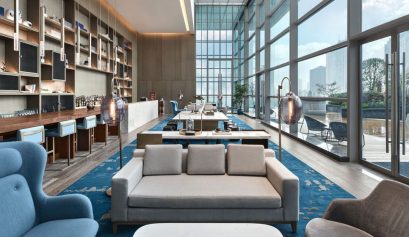
Located in the centre of the old town Nanjing, Kempinski Hotel Nanjing is adjacent to the Ming Dynasty Palace Ruins, the world’s largest palace complex during the Middle Ages. To remind people of the transient yet glorious dynasty and to endow the hotel with unique memorable points and core competitiveness, the designer applies cultural narratives of Ming Dynasty to the magnificent space to give a review of the ancient Chinese civilization that appeared 600 years ago.
Typical cultural themes of the Ming Dynasty, such as the ‘Imperial Palace’, ‘Jiangnan Examination Hall’, ‘Qinhuai Night Scenery’ and ‘Jinling Taverns’, are included in the space design. Through modern design approaches, rather than boring history reproduction, the design simplifies the otherwise complex palace architecture and royal culture, making space an epitome of history, a place that meets modern people’s residential requirements, as well as a perfect integration of international hotel brand advantages and local ethnic features.
See Also: Rockwell Group: Hotel Interior Design Inspiration


The lobby was the main point of the design. Its east-to-west orientation, plus the glass-structured curtain wall, introduces strong sunlight to the interior space. To reduce light transmittance, the ceiling is decorated with dark metal instead of regular white paint to darken the tone in the space. Carved feature screens, made of double-layered metal panels and placed at the reception, not only help weaken dazzling light but also lead guests into historical context through the Ming Royal architecture motif.
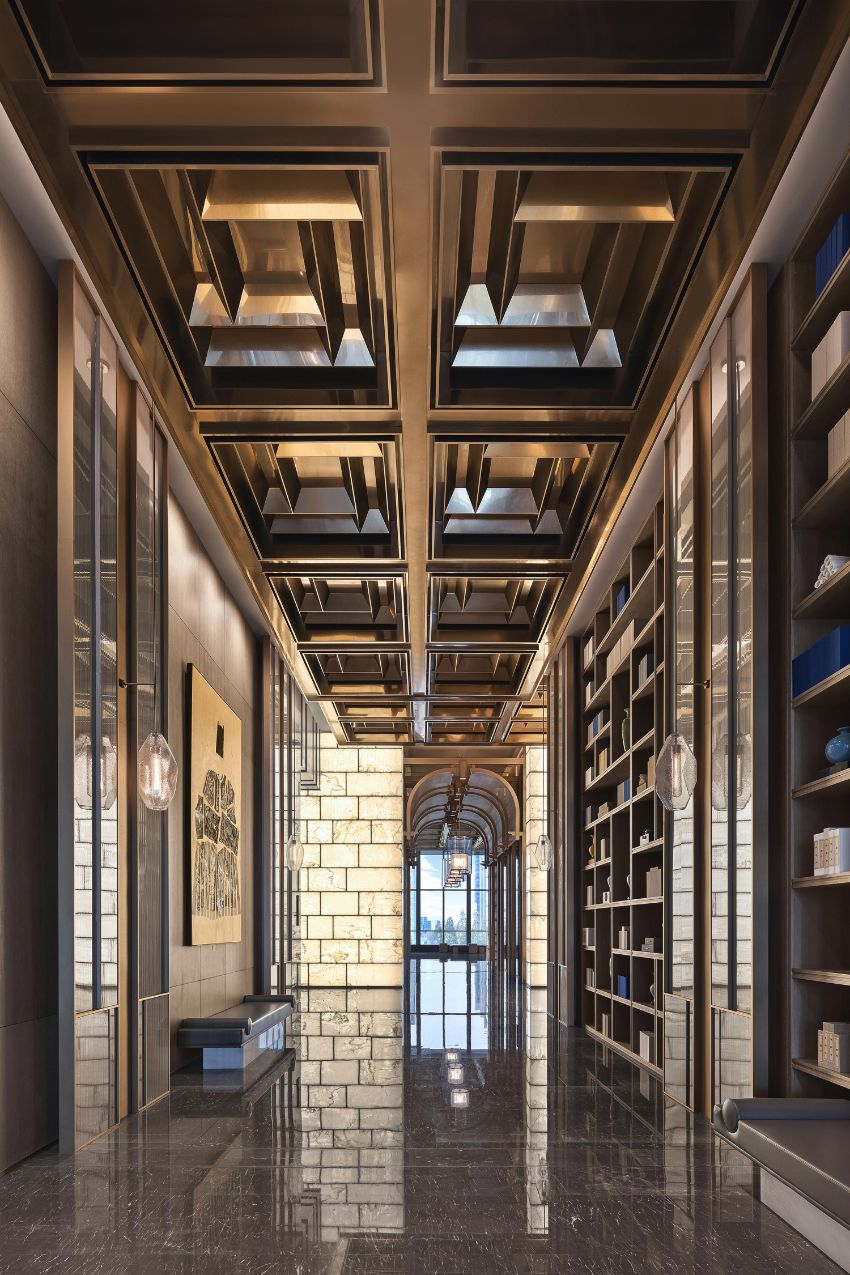
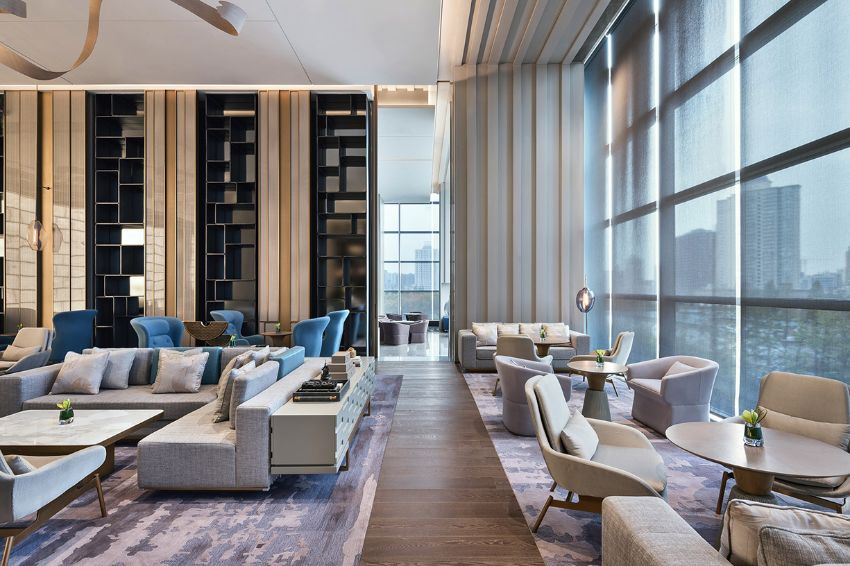

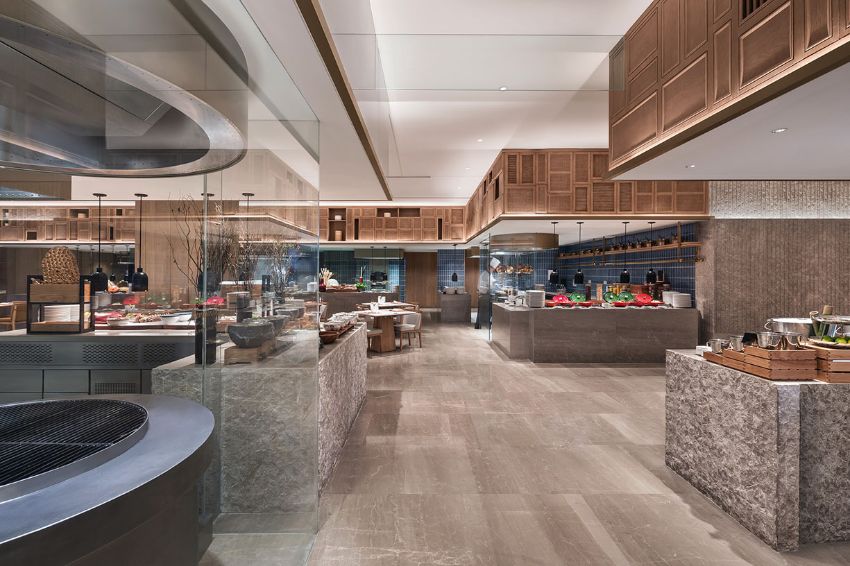
The design maximizes the usage of natural light to lower energy consumption. Cases include main function areas like the western restaurant, bar, lobby and lobby lounge all being arranged along the glass curtain wall to borrow outside landscapes and light for ambience creation. Ceramic tiles, low-impact paint and other innovative environment-friendly materials are used in the fitness centre to create an interior relaxation environment closer to nature.
See Also: The Most Luxurious Hotel Lobbies in the World

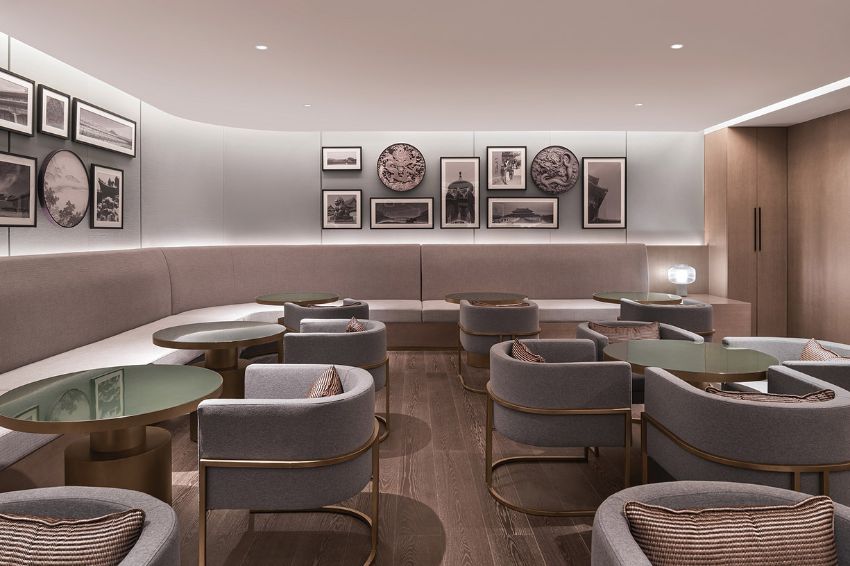

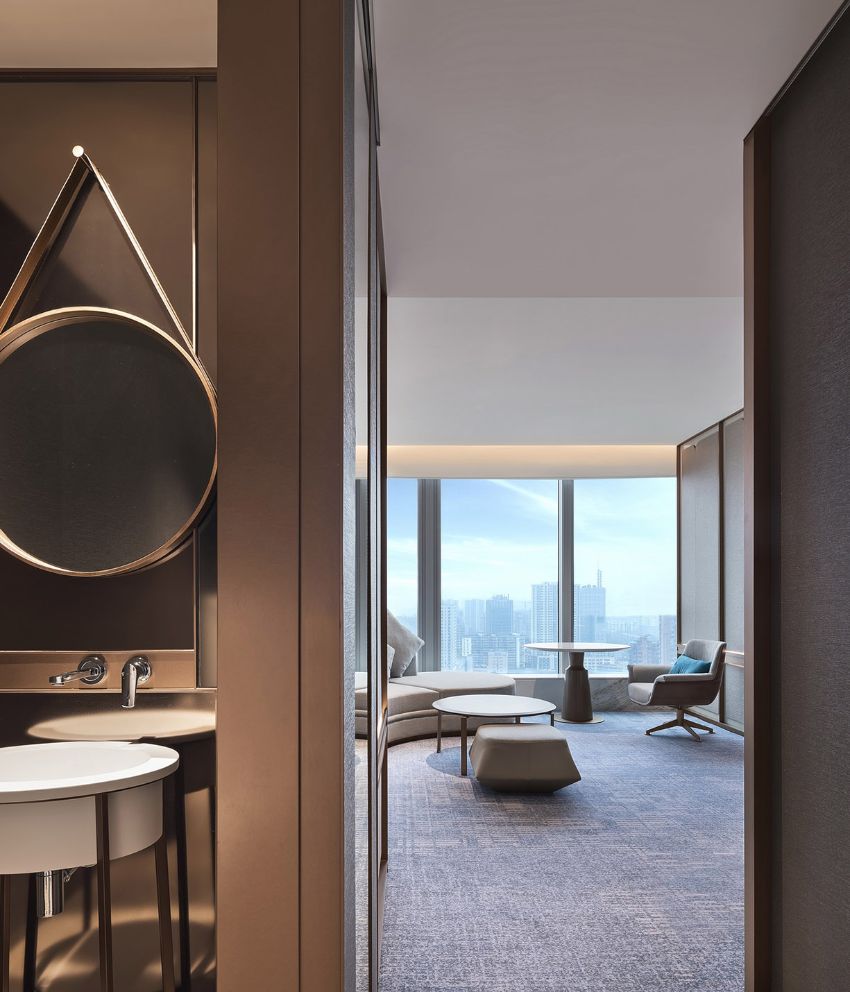
In terms of circulation design, considering business requirements and later-phase operation, the designer separates public areas from guestroom areas. The lobby and guestrooms are on higher levels, which can be reached via dedicated elevators and therefore provide a better and more private living experience. In contrast, the ballroom and restaurants are on the first floor to facilitate hotel guest services and to attract a surrounding potential customer. What is more, the lobby lounge, meeting room, bar and other adjacent function areas share the F&B preparation system to optimize public space efficiency while maximizing the hotel’s revenue.


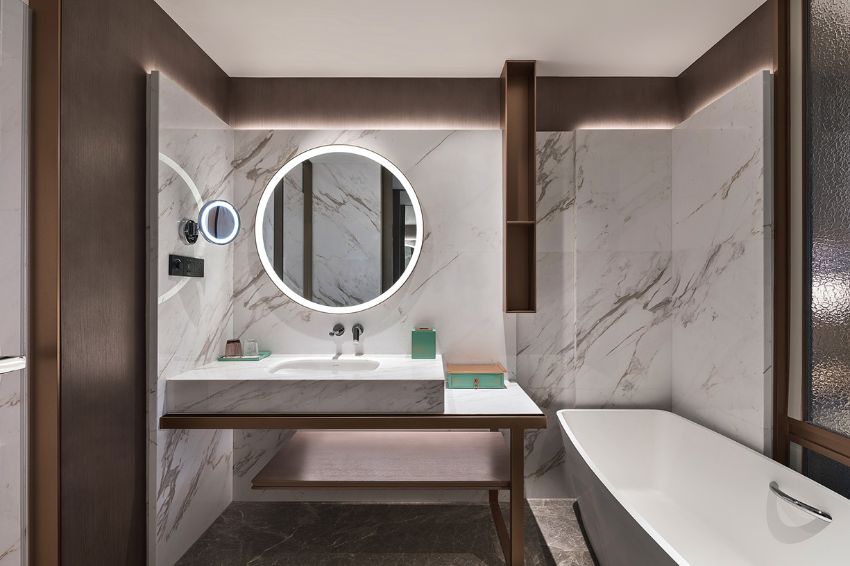
Yangbangsheng & Associates Group (YANG) is a large-scale Chinese design corporation based in Shenzhen, with offices in Paris, New York, Shanghai, Chengdu and Wuhan. YANG plays a leading role in China’s culturally distinctive hotel design, by insisting on an internationalized interpretation of local cultures and oriental aesthetics, and has constantly presented high-quality works, which won more than 200 awards at home and abroad, including Best of Hotel Category Award in the IIDA Global Excellence Awards Competition and the Best Resort in 34th annual Gold Key Awards for Excellence in Hospitality Design.
See Also: Salone del Mobile.Milano 2023: Speakers Agenda
What did you think about this article on the Kempinski Hotel Nanjing? Stay updated on more hospitality news by subscribing to our newsletter! For more luxury hotels, hospitality design and best hotel projects, don’t forget to visit our Pinterest and Facebook!
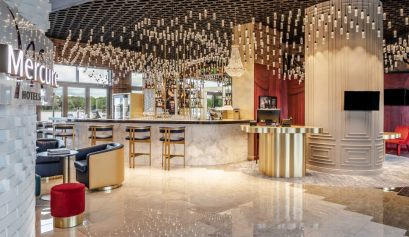
Hotel Mercure Kaliningrad’s design was inspired in the fairy tale heritage of the city Kaliningrad. It is a city where different cultures and traditions intertwine seamlessly: the famous storyteller Ernst Theodor Amadeus Hoffman – author of the magical tale of The Nutcracker and the Mouse King – was born and raised in Kaliningrad, where he also, later on, worked. The tale was then turned into a no less magical ballet to the music of Pyotr Tchaikovsky.
The curation of furnishings, lighting fixtures and textiles was guided by this whimsical inspiration that served as the groundwork for the project. Fittingly, one of BRABBU’s most quaint products was chosen to spruce up the lobby.
See Also: Fettle and The Hoxton Portland Hotel Project
The idea for the interior design of the hotel incepted in local history and culture – and the desire to merge them in a sophisticated ambience that was thrilling as well. The intent, and simultaneously the challenge, was to create an intense interior that wouldn’t jeopardize guest comfort. As soon as guests enter the lobby, they encounter a theatre-like interior where the past comes to life in a contemporary manner. Right at the entrance, the Mercure Brand logo can be spotted on a white layered brick wall with a unique layout. In this wall, rest secluded internal spaces with paintings based on Hoffman’s iconic fairytale, created using a mixture of combined collages and classical painting, effectively filling the room with enchanting art.


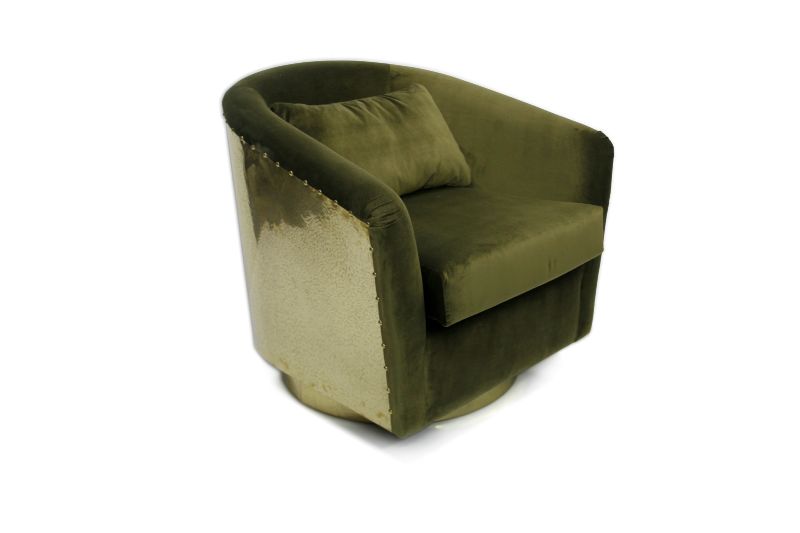
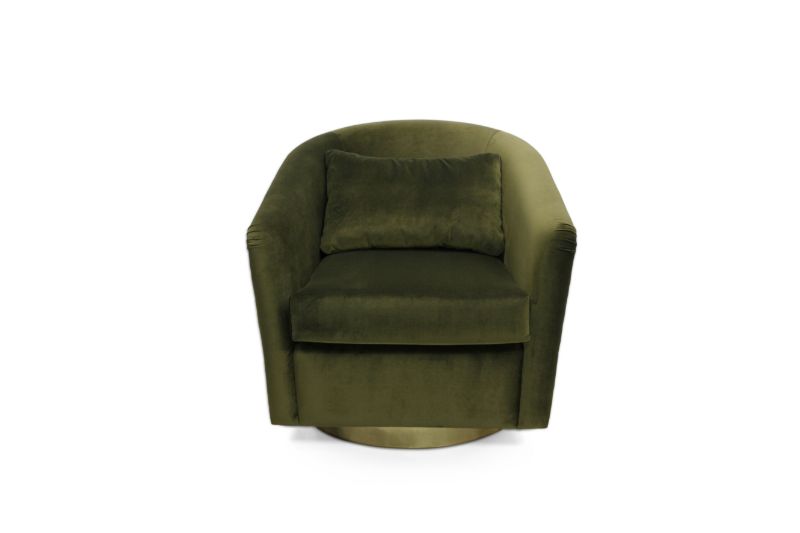
It is also in the entrance that guests will come across a true testimony to what intense interiors are. Right after the Mercure logo sits a welcoming waiting area, ready to comfort guests upon arrival, here, they’ll find custom EARTH Armchairs by BRABBU. With shelter-style arms and a barrel-shaped body, these armchairs vow to make a statement in any interior, all while supplying outstanding comfort.
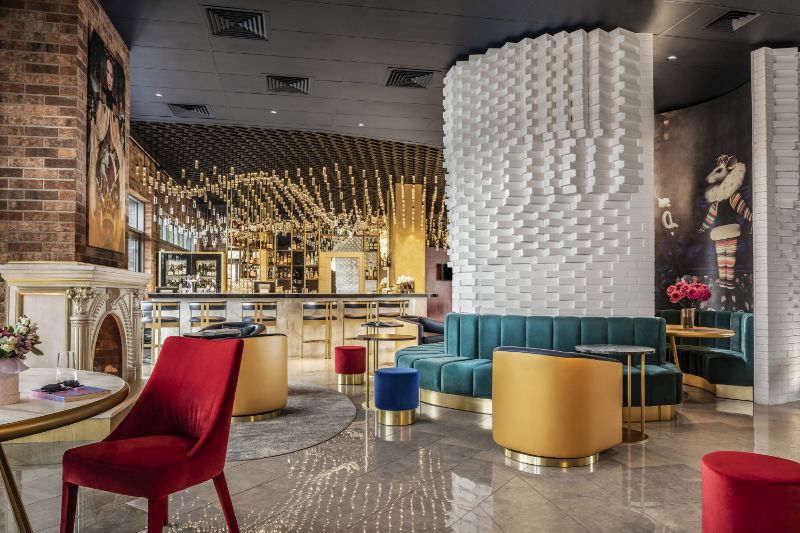

The décor of the entrance area makes several references to Kaliningrad’s history and even to its location. The burgundy velvet curtains serve as a play on those of a theatre, instantly transporting guests through their resemblance; showers of modern lighting fixtures of different lengths and a classic crystal chandelier demand the guests’ attention, enveloping them in this transcendent design experience and, last but not least, paying homage to the hotel’s waterfront location, the ceiling and some of the walls have been painted in a deep blue shade, matched by the upholstery and some of the curtains.
See Also: Can Bordoy Hotel Project in Palma de Mallorca by OHLAB


The bar is nothing short of spectacular either. The counter is built from white marble with gold veins, accentuated by the gold hardware of the bar chairs and the back wall is decorated with a mirror that reflects all the splendour of the lobby. The rooms, in their turn, are inspired by the visual aspect of the city of Kaliningrad, recreating its towers and inclined roofs with a modern twist. Graphic patterns of the city’s historic facades grace the floors, walls and ceilings, bringing the cosmopolitan feeling into the room in a fashionable way.
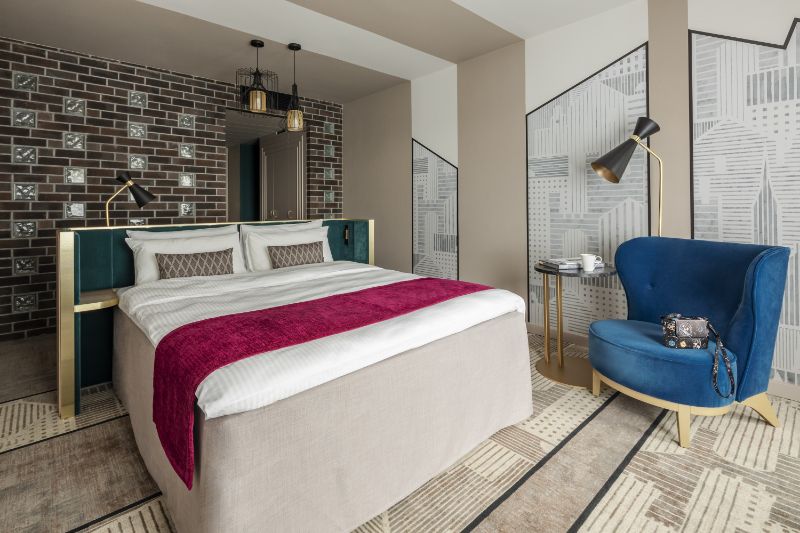


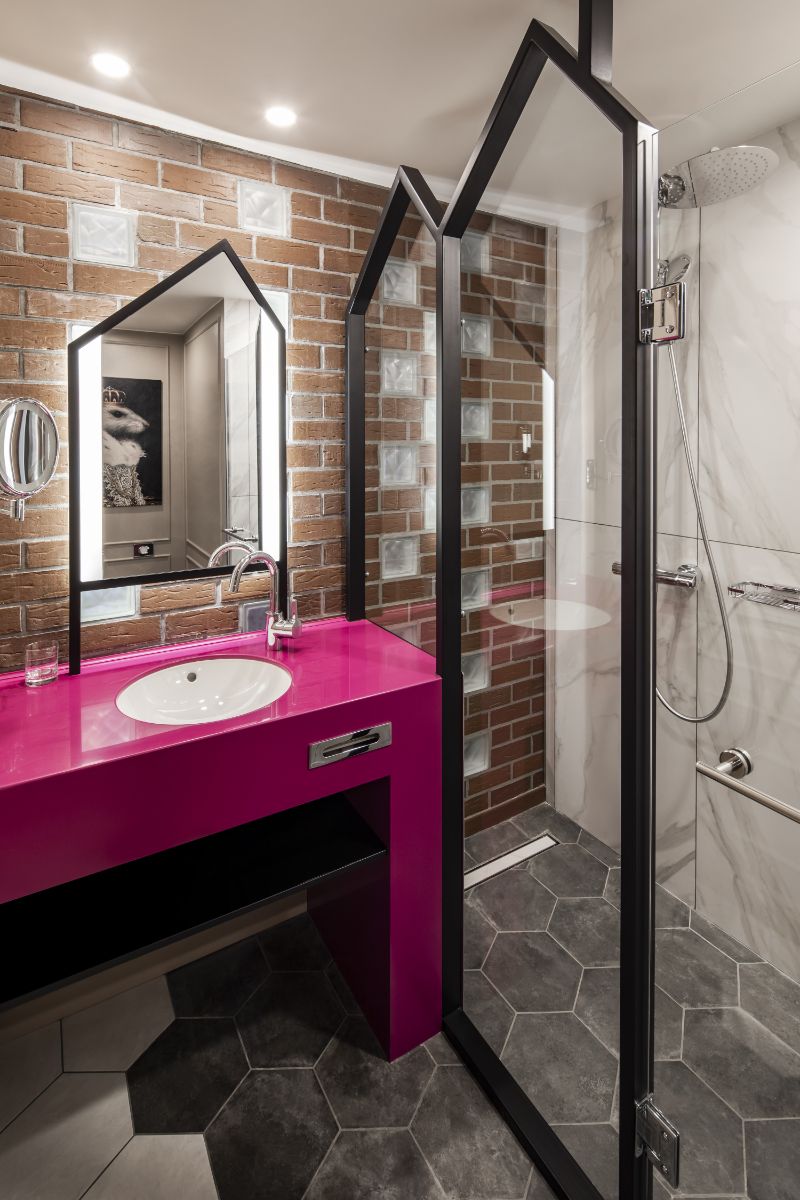
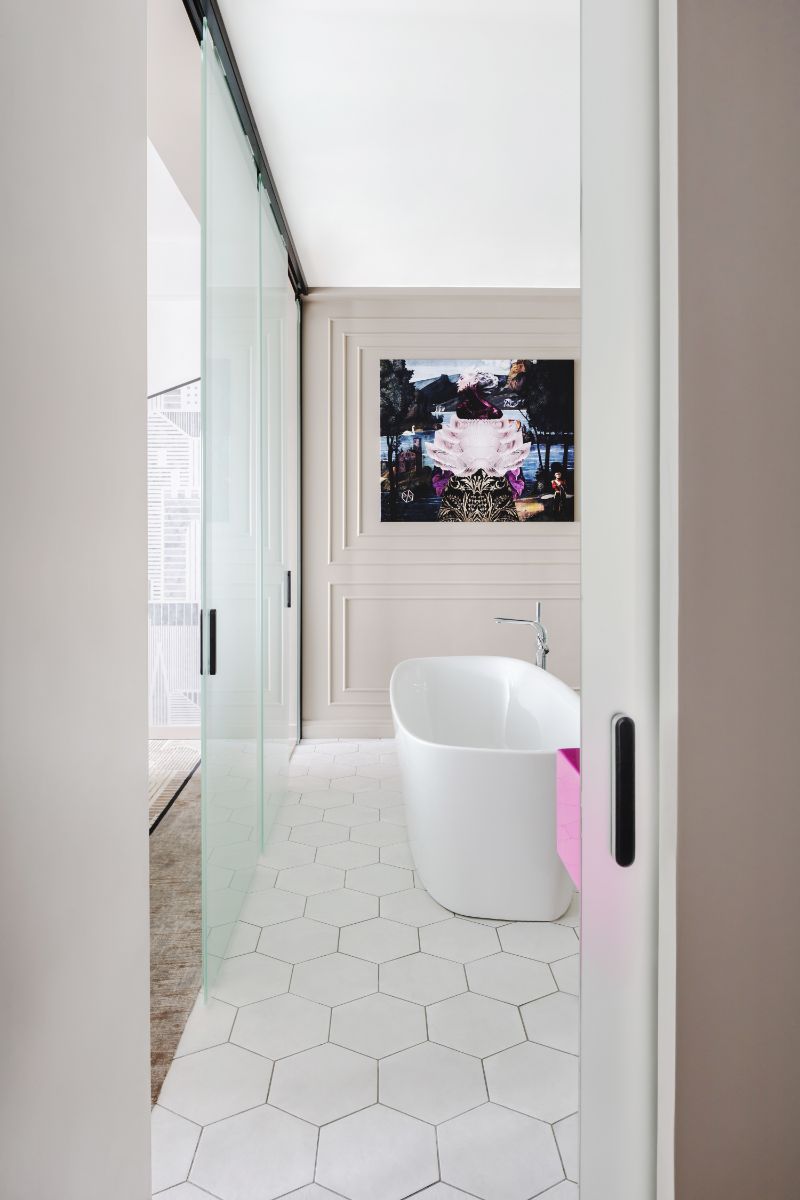
The wall separating the bedroom from the bathroom was created by combining burgundy bricks and glass blocks, resulting in an inimitable look and texture. To bring a sense of warmth and comfort into the bedrooms, bright, vibrant accents were added, such as magenta bed runners, greyish blue chairs and emerald headboards. The attention to detail all throughout this hospitality project is remarkable, and it paid off greatly. Through an impeccable use of lighting, colour, texture and art, an atmosphere that combines history, comfort, intensity, relaxation and fairytales, was flawlessly achieved.
See Also: Eliská: Blending Cultures and Experiences in a Unique Way
What did you think about this article on Hotel Mercure Kaliningrad? Stay updated on more hospitality news by subscribing to our newsletter! For more luxury hotels, hospitality design and best hotel projects, don’t forget to visit our Pinterest and Facebook!
Fettle is a boutique interior architecture and design firm specialising within the hospitality sector. They work with a variety of clients, from one-off operators and start-ups to large commercial brands. They create beautiful, functional spaces which portray their history, their location and their ethos. From their offices in London and Los Angeles, Fettle provides a full spectrum of services, from space planning and project feasibility studies to bespoke lighting and furniture design.
See Also: Can Bordoy Hotel Project in Palma de Mallorca by OHLAB
Fettle has worked in collaboration with Ennismore to design The Hoxton Portland, the sixth hotel in the brand’s portfolio. Located on the site of a former 1920’s theatre in the historic Chinatown district of the city, the studio was appointed to design the public spaces of the hotel, including the restaurant, cocktail bar, lobby, cafe and ‘apartment-style’ meeting spaces. Keeping true to the hotel’s style and ethos, the design studio took inspiration from the surrounding location, known for its industrial, gritty backdrop juxtaposed with areas of surrounding natural beauty.
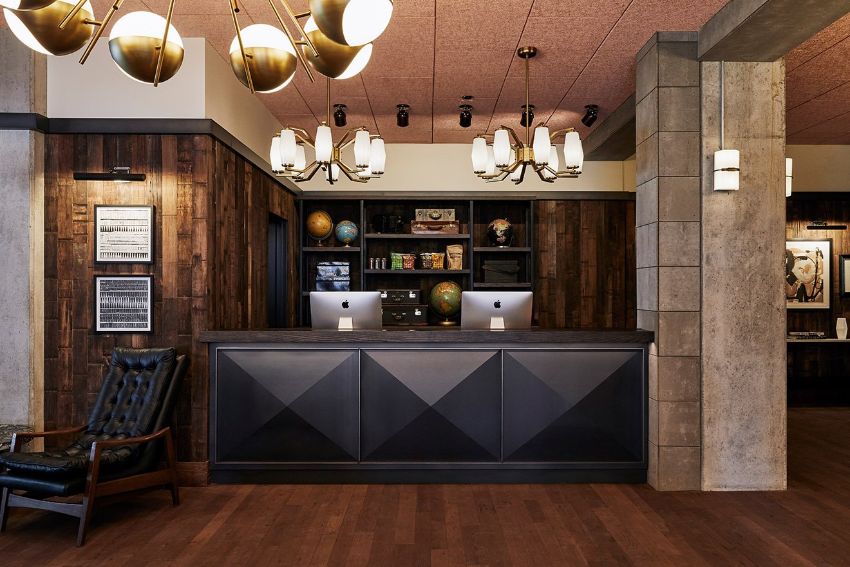

The fabric and history of the structure also played a large part in the inspiration behind the designs of the project. The hotel is a combination of an old 1920’s theatre and a new build tower which houses the hotel rooms. The old part of the hotel features beautiful heavily textured wooden columns, old plaster finishes and textured concrete which have been retained and restored as part of the design concept. In contrast, the new part of the building features a clean and industrial presence with a striking glazed facade. The combination of modern design paired with traditional style and features underpins the iconic Hoxton Hotel House style.

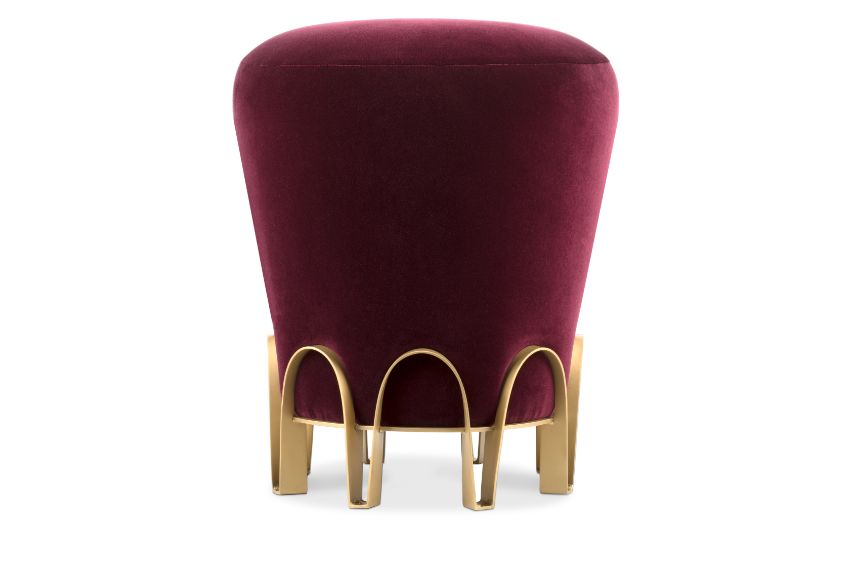

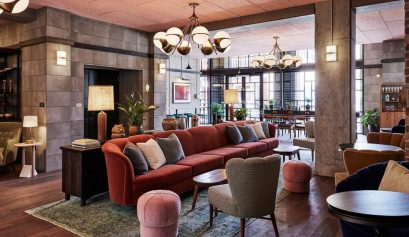
The public spaces showcase distinct personalities yet stylistically connect to one another through material, fixtures and furniture design. The heart of the hotel, the lobby, is a community hub and place for socialisation for guests and locals alike. The interior’s open planned design includes an expansive brick wall featuring an integrated central fireplace, a focal point around which the colourfully upholstered mid-century inspired furniture is orientated. The pendant lights that feature within the space were custom designed by Fettle for the project and are complimented by Armstrong’s Tectum wood/wool ceiling panels, coloured in a soft and inviting Bella Pink hue.

See Also: Eliská: Blending Cultures and Experiences in a Unique Way
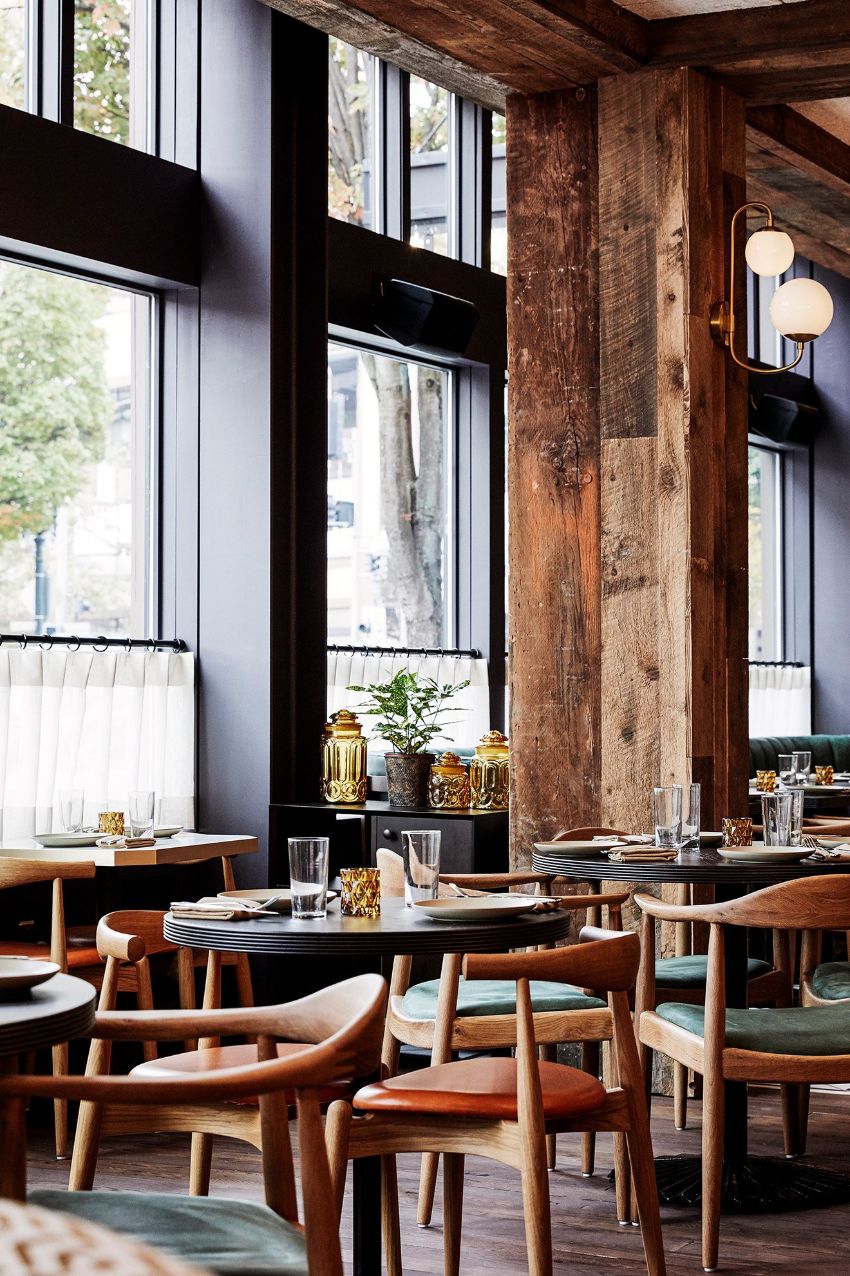
The bar and restaurant interiors sit to the front of the building and are surrounded on two sides by the full height glazing of the existing facade. A large timber topped bar with colourful teal underside stands prominently on one side of the space, while reclaimed timber flooring, sourced locally from Pioneer Millworks, runs through from the lobby.
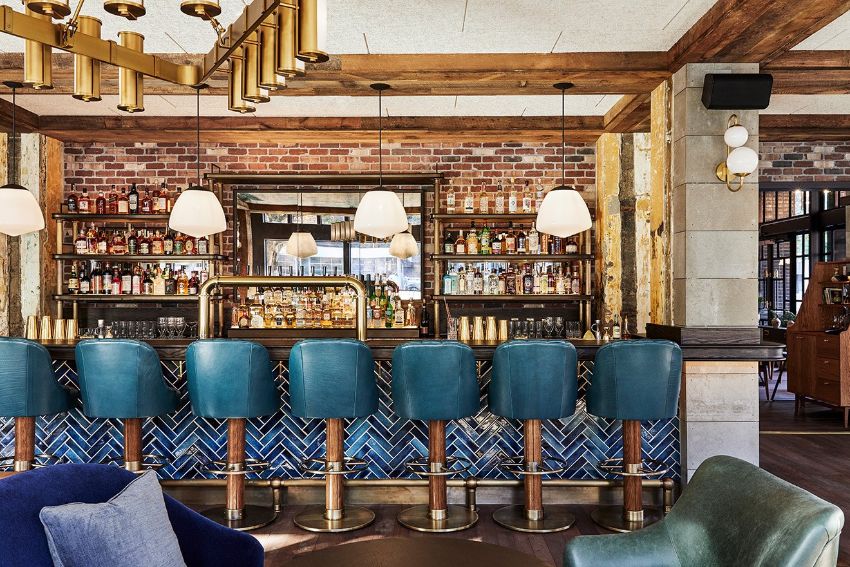
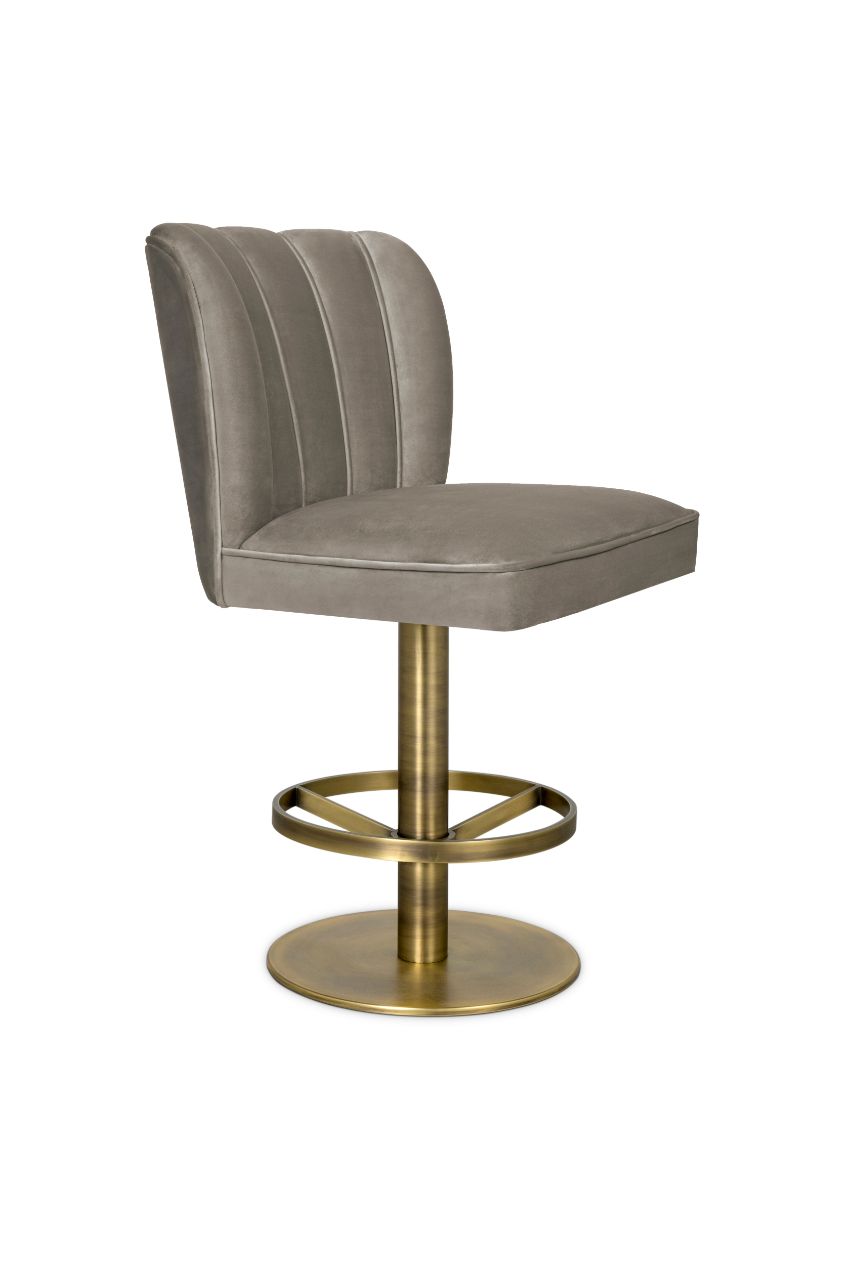

The restaurant ‘La Neta’, is located at the opposite end of the room and features walls clad in dark painted timber panelling, adorned with Latin-inspired artwork curated by local art consultant Upfor Gallery. Simple freestanding banquettes, upholstered in aged green leather, are coupled with timber and tan leather chairs and oak dining tables. A bespoke black, white and gold patterned floor tile differentiate the restaurant from the bar space.
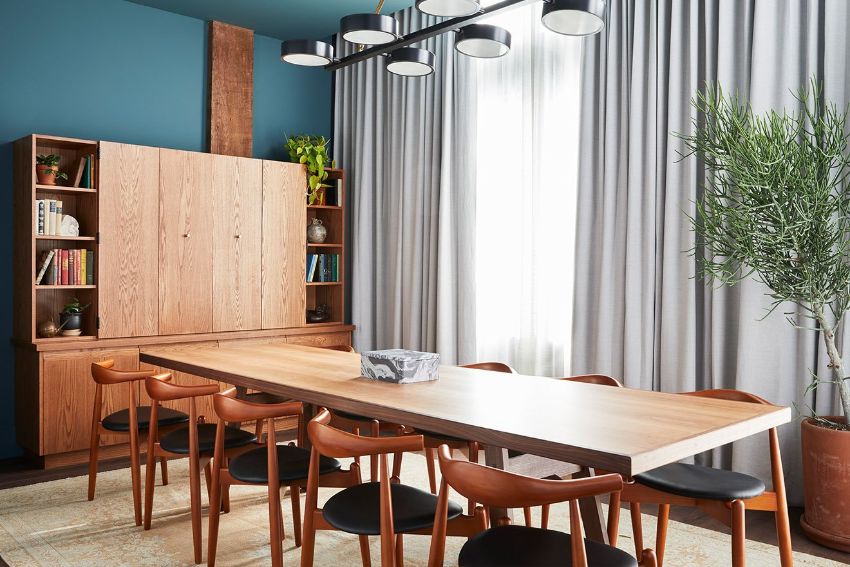

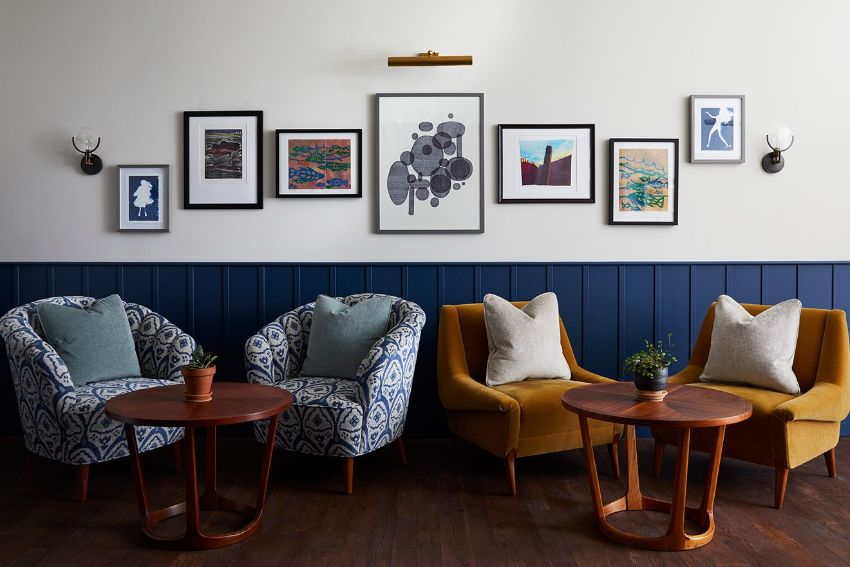
Catering for meetings and events, ‘The Apartment’ has four rooms in varying sizes the lead out to a central pantry-style kitchen. Classic Mid-century teak furniture dresses the rooms, easily configured to accommodate a diverse range of uses. Homely touches such as the introduction of colourful and contemporary artwork, books and foliage create a relaxed environment that encourages visitors to make it their own. The central kitchen, the hub of ‘The Apartment’ continues the same aesthetic with fully stocked cupboards and fridge, surrounded by soft velvet upholstered lounge seating and a kitchen island with five velvet barstools allowing guests to sit and socialise in the heart of the home.

See Also: Cretan Malia Park Hotel by Vana Pernari Architecture Studio

What did you think about this article on Fettle? Stay updated on more hospitality news by subscribing to our newsletter! For more luxury hotels, hospitality design and best hotel projects, don’t forget to visit our Pinterest and Facebook!
Can Bordoy is a small hotel located in the centre of Palma de Mallorca. OHLAB did a complete renovation of an abandoned building that has been intervened throughout its more than 500 years of history.
OHLAB is an award-winning company devoted to the urban analysis and cultural research of contemporary society through design, architectural practise and urban strategy. The company has been awarded the Interior Design firm of 2019 by Architecture Masterprize, selected as one of the best 6 emerging interior design studios of 2018 by Dezeen and has been previously described by the Chicago Atheneum as one of Europe’s most important emerging architects.
See Also: Eliská: Blending Cultures and Experiences in a Unique Way
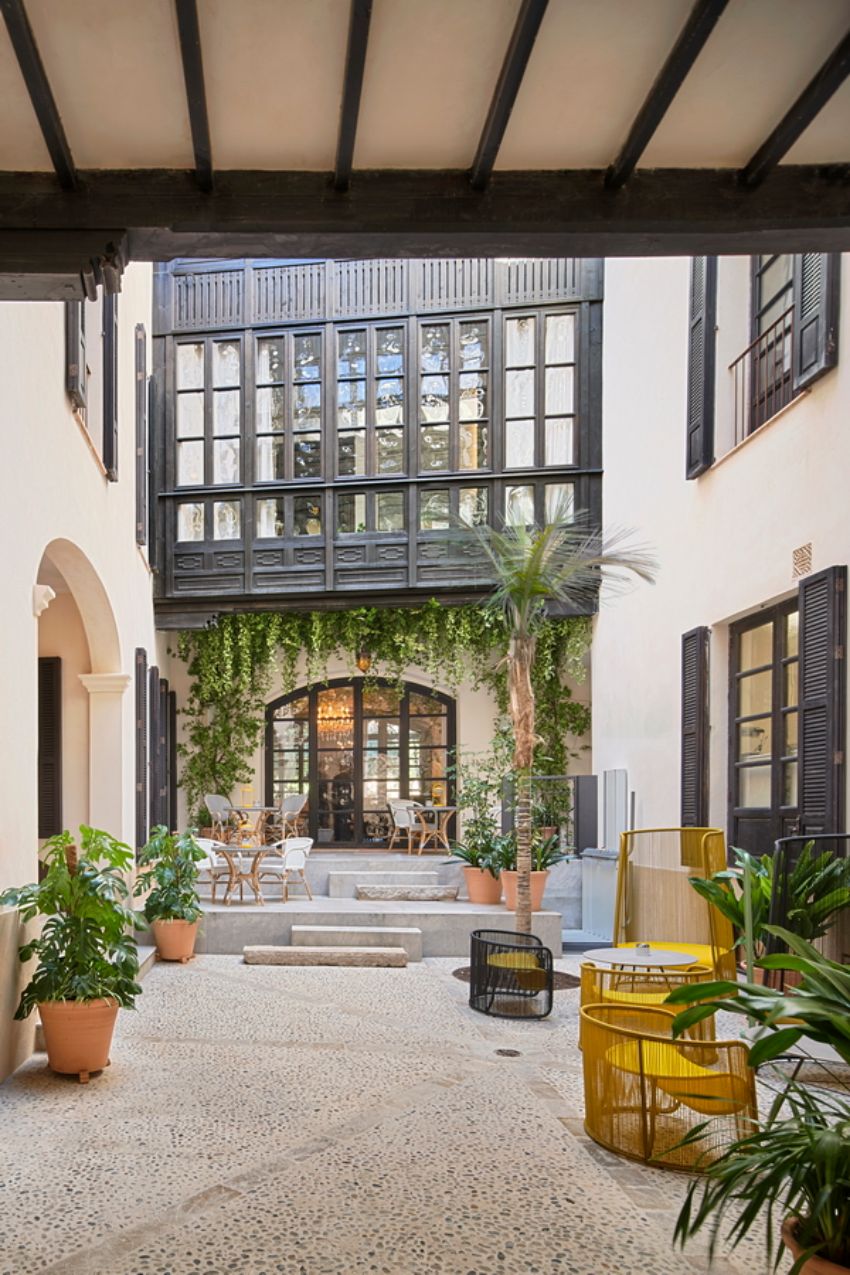

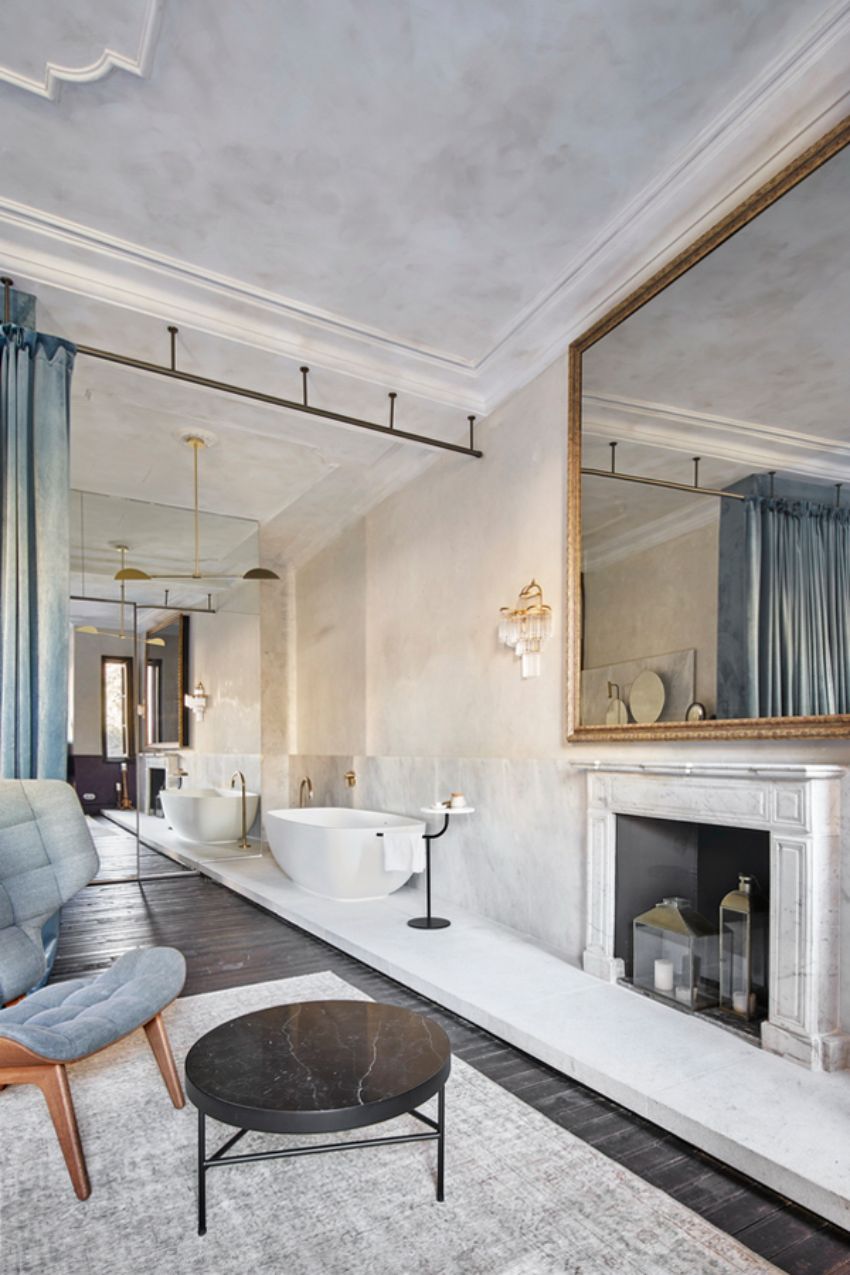
The renovation of Can Bordoy was made in order to evoke the experience of visiting a house more than a hotel. Hence, rather than being at the hotel reception, visitors meet at the entrance hall of the house, and instead of a restaurant, there is a residential dining room, bedrooms and living rooms are the same as the ones one finds in a home.


Inspired by Kintsugi – the traditional Japanese technique of repairing broken antique porcelain with gold dust that does not hide the fracture – the project carefully preserves the romantic and decadent atmosphere found in the building and is deliberately contrasted with interventions and elements from different epochs. The proposal respects the existing centenary architectural crossbreeding, maintaining the traces of the past and avoiding a false recovery of a glorious past that the house never had.
See Also: Cretan Malia Park Hotel by Vana Pernari Architecture Studio


A series of architectural strategies were designed and developed throughout the building as a collection of theatrical and distinctive contemporary interventions in dialogue with the existing building.

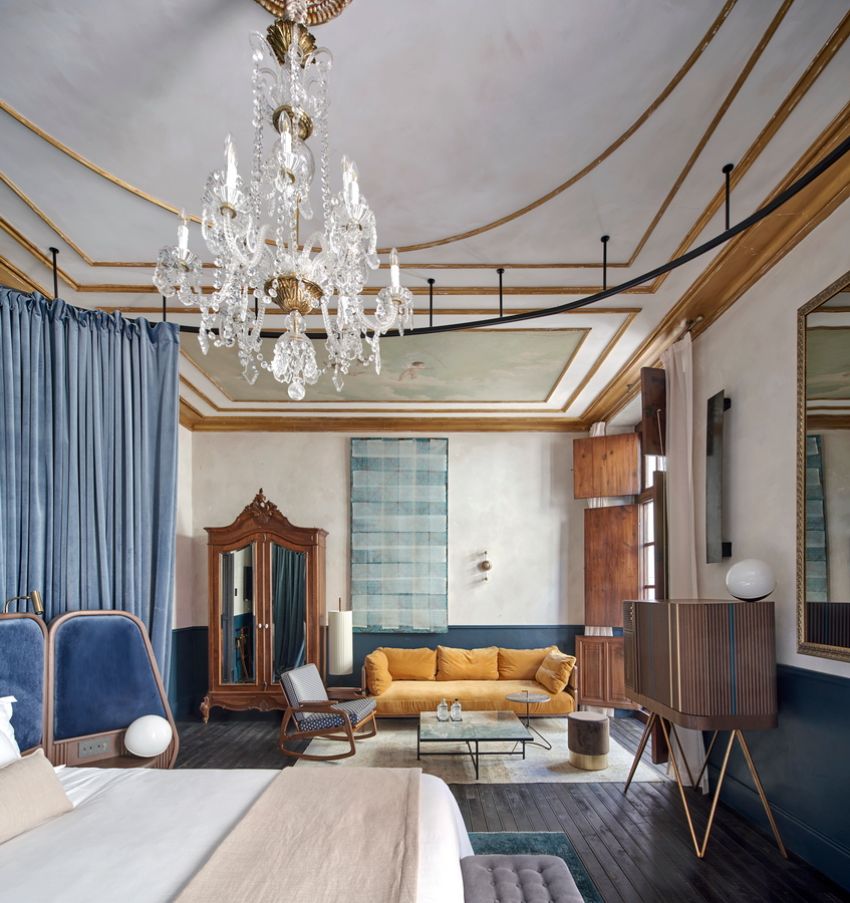
The eclecticism of the architecture is reflected in the furniture with pieces from very different eras and origins that coexist with contemporary furniture as a collection of beds and bars designed by OHLAB specifically for Can Bordoy.

To find out more about OHLAB check their website here.

Cretan Malia Park Hotel, located in Crete, Greece, was designed by Vana Pernari Architecture Studio, being shortlisted for The International Hotel and Property Awards 2020 as well as for Frame Awards 2020.
Located on a what used to be a campsite, Cretan Malia Park is surrounded by lush gardens that date back to the late ’70s. The buildings are modernist structures scattered amongst those gardens, were originally built in the late ’80s by Antonis Stylianides of 3SK Stylianidis architects, who once worked alongside German Architect Gropius.
See Also: The Most Luxurious Hotel Lobbies in the World


Cretan Malia Park was fully renovated by Vana Pernari Architecture Studio. The wild Cretan, and in specific Malian flora, with palm trees, Indian figs and local banana trees, are part of beautiful exotic Mediterranean gardens which remain until today a strong reference point and a source of inspiration for its architecture and style.


See Also: BG Studio International, Celebrating Flora With Hotel Design
Vana Pernari Architecture Studio‘s approach is always aesthetic, functional, experimental, respecting nature and its balance, aiming at creating meaningful spaces. They are constantly searching for more light, space and green. Inspired by Van Gogh‘s quote ‘The Mediterranean has the colour of mackerel, changeable I mean. You don’t always know if it is green or violet, you can’t even say it’s blue, because the next moment the changing reflection has taken on a tint of rose or grey.’, the colour palette of a typical Mediterranean area is very much present at the hotel.


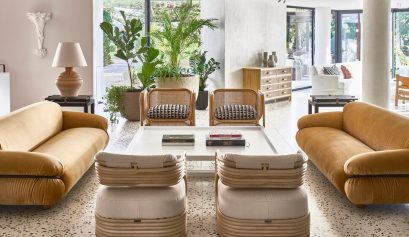
Material-wise, Vana Pernari Architecture Studio used natural materials like marble, cotto, wood and brass avoiding artificial materials while creating bright spaces with relaxed, earthy and slightly boho mood but with a touch of colour and elegance, to bring inside the colours and joy of the hotel’s amazing gardens as well as the colours found on the murals and artworks of Crete’s Minoan palaces presented in an exotic way.


To find out more about Vana Pernari Architecture Studio and their amazing projects, check their website here.
See Also: Rockwell Group: Hotel Interior Design Inspiration

Stay updated on more hospitality news by subscribing to our newsletter! For more luxury hotels, hospitality design and best hotel projects, don’t forget to visit our Pinterest and Facebook!
 Enjoyed this article on Cretan Malia Park Hotel? Pin it!
BG Studio International is a hospitality design firm, specialised in upscale hospitality, multi-family, nautical and commercial interiors. Founded by Francesca Bucci, she brings twenty-five years of experience, incorporating diverse influences with the best design practices, construction and an ability to coordinate and manage multiple projects across North America and Europe.
BG Studio is equipped to handle new-builds, renovations, conversions and adaptive-use projects, being highly regarded for delivering exceptional concepts that meet budgetary and scheduling requirements. So it is no wonder that their project Flora is a front runner for the Frame Hospitality Awards 2021.
See Also: Virserius Studio – The Hotel W Atlanta Midtown
BG Studio created Celebrity Flora with the aim to celebrate luxury interiors co-habiting with the eco-mandates for travelling to the Galapagos Islands. The Studio used textures and elements that reflect the topography, marine and animal life, as well as sustainable materials and locally-sourced furnishings.
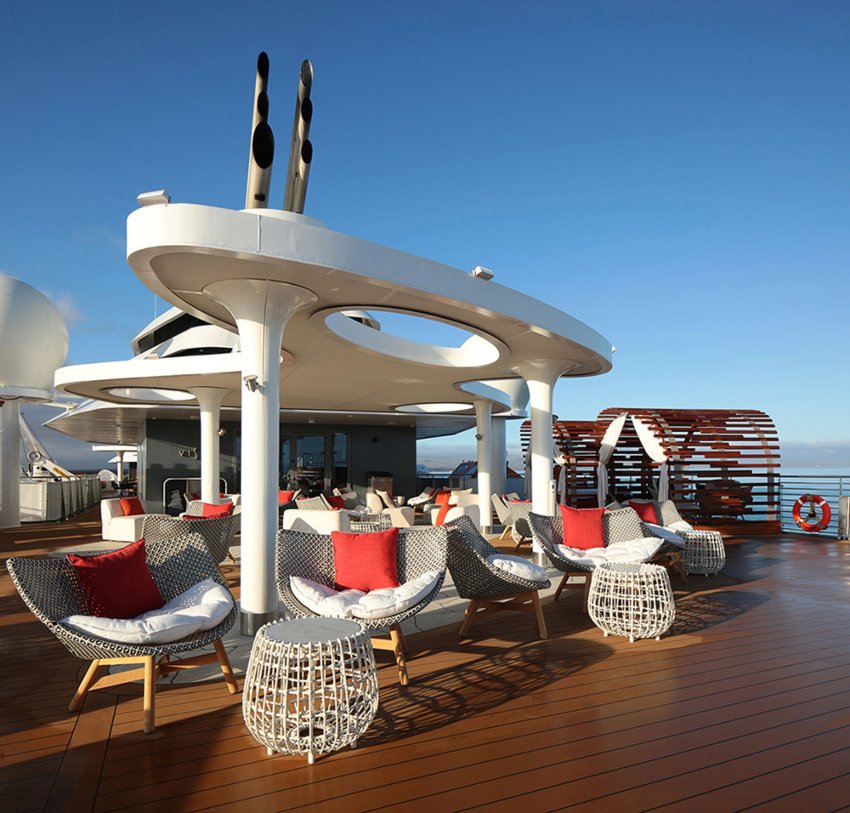


Care is taken to minimize guests’ eco-impact: the need for plastics is reduced via in-room water filtration and by converting seawater into air conditioning into freshwater; guests use recycled water bottles and all interior lighting is LED. In addition, spaces must perform while being exposed to sun, sea and rigorous activities: swimming plus excursions.


See Also: The Brit List Awards Winners Announced In a Digital Event For The First Time
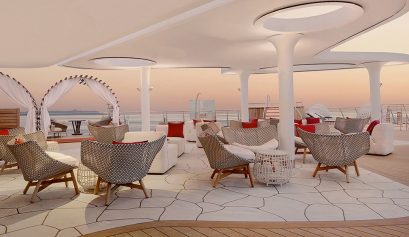
The Vista, the outdoor lounge, is where guests can glamp via Private Cabanas and Ocean Grill, provide space for lounging and outdoor dining. The spacious, glass Observatory Lounge, allows to view and enjoy the sea life. Flora has four top-tier suites: two royal suites with bed and living rooms, private veranda; plus two penthouse suites, offering sublime modern luxury with floor to ceiling windows, spacious wrap-around terrace and jacuzzi.


In short, there is no other operating sea vessel that compares to Flora, combining a contemporary aesthetic with sustainable design at the luxury level. This effort represents the first of its kind by Royal Caribbean Cruises Ltd., a gamechanger in the cruise industry who relied on long-time interior designers and architects. The exquisite interior draws inspiration from the Galapagos Island, incorporating sustainable materials from local sources, meets rigorous requirements, maximizing interactions with nature and the sea.


To find out more about BG Studio International, check their website here.
See Also: Atelier Hammerl Dannenberg – Soller Business Hotel

Stay updated on more hospitality news by subscribing to our newsletter! For more luxury hotels, hospitality design and best hotel projects, don’t forget to visit our Pinterest and Facebook!

Enjoyed this article on bg studio international? Pin it!
Chateau de Vignee was previously a classic hunter’s hotel strategically located between Brussels and Luxembourg. The brief WeWantMore received was to transform it into a top destination for travellers in the luxury segment in the Belgian Ardennes region, offering an all-encompassing high-end hospitality experience. The project brief included the interior design of a boutique hotel with twenty-five bespoke rooms, a bar area, a Gault & Millau listed restaurant, a private dining, two event venues and an in- and outdoor wellness area.
It was key to appeal to both the modern–day traveller with high-end design needs in the luxury segment as the more conventional existing hunting clientele of the estate. Furthermore, the requirements set by Relais & Chateaux needed to be met within the context of the 17th-century chateau building. The old chateau building and the courtyard were completely restored, while a new-build element was added to the estate to host part of the rooms and the entire wellness area.
See Also: Virserius Studio – The Hotel W Atlanta Midtown

Chateau de Vignée was set on becoming a luxury retreat for its guests to escape a fast-paced society. Unwinding there means surrendering to nature because the strong-willed landscape of the Ardennes is truly undeniable. So, WeWantMore positioned Chateau de Vignée as an entity in sync with its natural surroundings. The design concept sprouted from the hotel’s history and impressive surroundings.

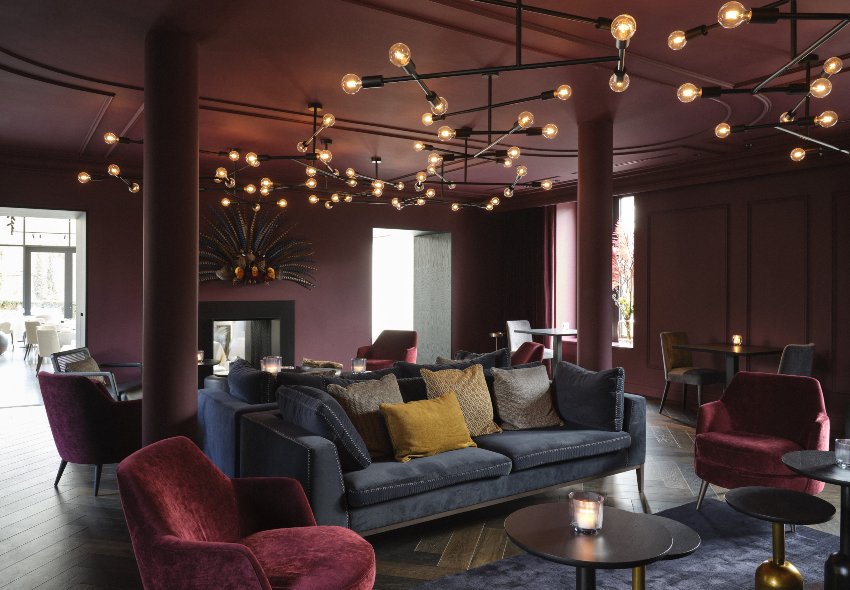

Intrigued by the Chateau’s century-long link with hunting, WeWantMore imagined the sensorial experience of a hunter exploring the Ardennes. The visual perception of sunlight breaking through the leaf canopy. A ray of light strikes one spot but leaves its surroundings in the dark. Like a natural claire obscure effect. The sounds of the misty forest awaking. The lingering suspense of an unexpected encounter. The design studio aimed to capture this feeling in the design of the interior and branding because it is sensation hotel guests will resonate with during their stay in the Ardennes region.
WeWantMore expressed the hunter’s journey throughout the interior. Entering the main chateau building immediately sets the tone. A seasonal faux flower installation descends from the sky in the lobby. Rays of sunlight seem to pierce through the greenery. In the bar section, a custom-designed bas-relief in the back bar catches the eye. The hunting scene is made up out of Ardennes sourced BlueStone.
See Also: The Brit List Awards Winners Announced In a Digital Event For The First Time


WeWantMore opted for native marbles and natural stones like Rouge Belge and Gris d’Ardenne throughout the entire project to add to the main design concept. The tailor-made terrazzo flooring in the lobby is entirely composed out of marble fragments of the former hotel rooms. The hunter’s journey continues in the lounge, where the custom-designed lighting branches out across the ceiling conjuring the same early morning, gloomy forest atmosphere. The interior design of the rooms echoes the fluid beauty of the Ardennes region. Expressive and flamboyant on occasion, but equally pure and tranquil at other points in time.
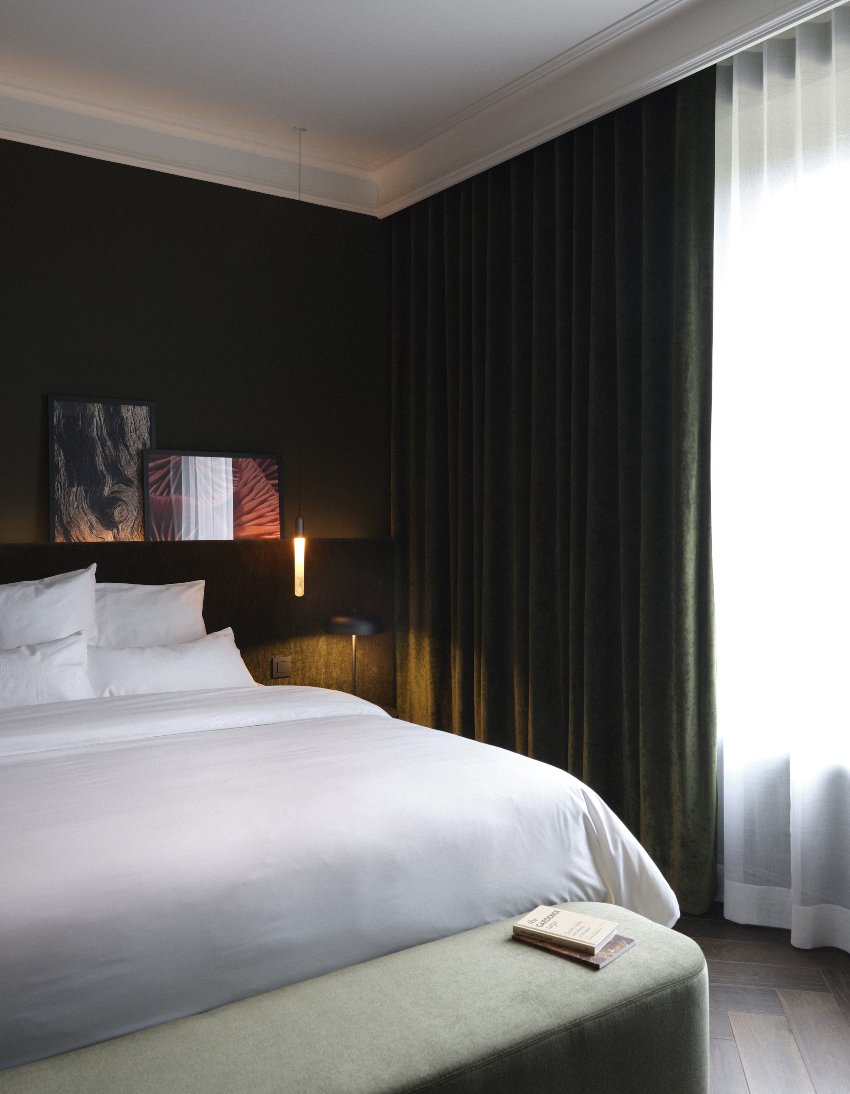

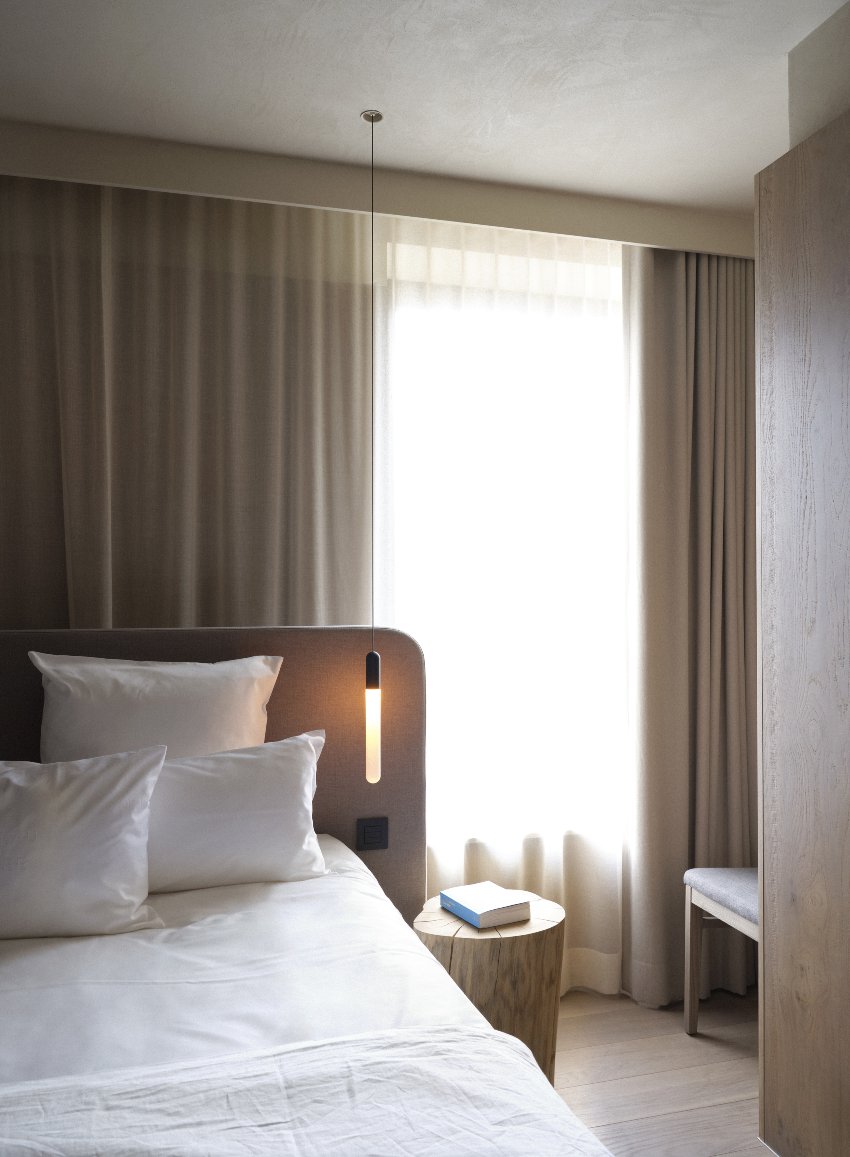

Since it was key to appeal to both the modern-day traveller as the more conventional existing clientele of the estate, WeWantMore searched for the right balance between heritage and marvel. The design studio wanted to make it genuinely fun for guests to be there, but still, respect the history of the building and site. So, WeWantMore interpreted classic hunting and natural elements in a novel way. The visual identity draws from the same hunting narrative. Just like Chateau de Vignée’s surroundings, all branding elements, as well as the installations, are updated every season to align with the overall guest experience. While some hotels offer a sense of escapism by keeping out the outside world, a Chateau de Vignée, WeWantMore consciously pulled it indoors to enhance the connection with nature. The interior design and visual identity combined, reduce the boundaries between out- and indoors to a minimum adding to the unwinding experience of Chateau de Vignee.
To find out more about WeWantMore’s work, check their website here.
See Also: Atelier Hammerl Dannenberg – Soller Business Hotel
Stay updated on more hospitality news by subscribing to our newsletter! For more luxury hotels, hospitality design and best hotel projects, don’t forget to visit our Pinterest and Facebook!

Enjoyed this article on chateau de vignee? Pin it!
Atelier Hammerl Dannenberg accompanies museums, institutions and companies in their projects such as exhibitions, museum planning, corporate design and corporate architecture or in the scenographic implementation of brand worlds. The Atelier is a competent and experienced partner from concept development and budgeting to drafting and planning to construction supervision.
The Soller Business Hotel is located in the middle of the Munich Airport Business Park in Hallbergmoos. The location is undergoing a transformation from its original rural structure to a location with high-tech companies.
See Also: The Brit List Awards Winners Announced In a Digital Event For The First Time
The new owner-managed hotel is a home for business guests and travellers. After a long day, the hotel Soller is a place to relax and take a deep breath. The concept is based on human needs. It combines the sustainability of nature with modern standards.
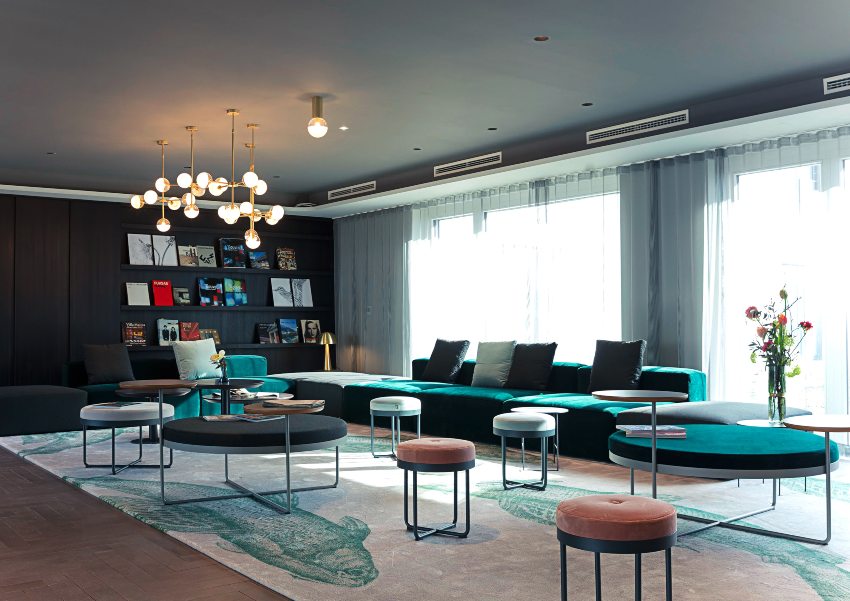

Atelier Hammerl and Dannenberg created spaces which radiate peace and well-being. Therefore the hotel is designed in natural materials and colours. The fauna and flora of the Isarmoos was the Atelier’s inspiration with its colours, shapes and light effects for the interior design.
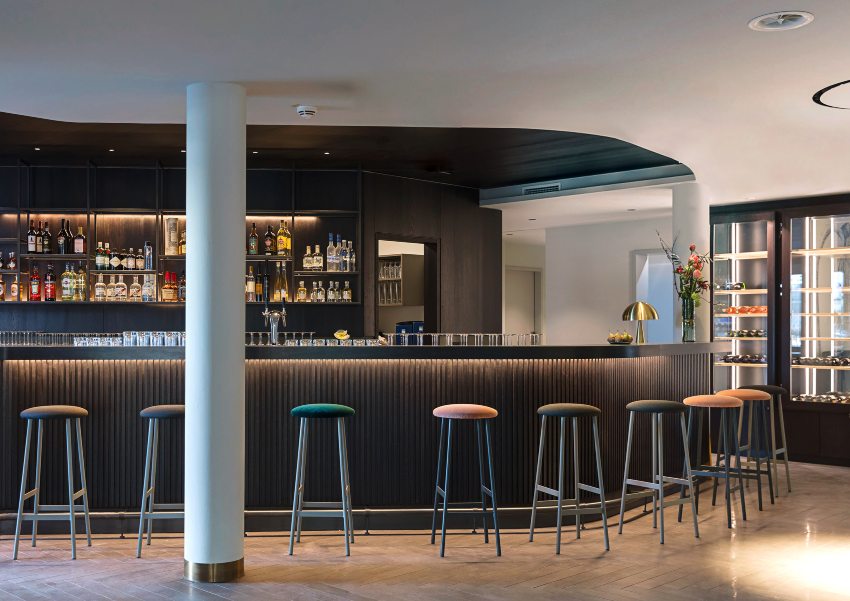

See Also: Virserius Studio – The Hotel W Atlanta Midtown
The guests live in large, calm rooms with high-quality oak fixtures. All standard rooms have their own writing places and tea stations, whereas the suites are equipped with pantry kitchen for long stay guests. The colours of the standard rooms are in the natural green tones of the nearby moos. In contrast, the suites on the top floor show the colours of the typical fog.


All around the house, guests find Illustrations of natural elements, which had been drawn according to the Atelier’s specification. The graphics were used individual for wallpapers, carpets and murals. Thematically, the images are part of the orientation system, from the fish in the cellar to the birds in the attic.

In the lobby, guests should feel at home. A large, cosy sofa landscape, partly covered with velvet, invites you to stay longer. An eye-catcher is the over 7m large carpet specially designed for the hotel. In the restaurant, deep, upholstered benches and dining sofas create a cosy atmosphere.
Atelier Hammerl Dannenberg‘s project Soller Business Hotel is a front runner to the Frame Awards 2021!
See Also: Yang Bangsheng and Associates Group, The Golden Eagle Hotel

Stay updated on more hospitality news by subscribing to our newsletter! For more luxury hotels, hospitality design and best hotel projects, don’t forget to visit our Pinterest and Facebook!

Enjoyed this article on Atelier Hammerl Dannenberg? Pin it!
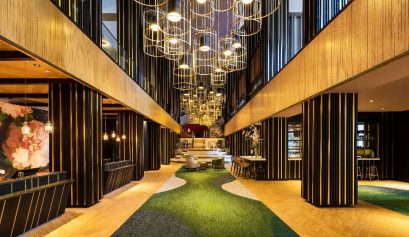
Virserius Studio is a multidisciplinary design firm from Atlanta that has a team of designers, artists and storytellers. These teams draw from diverse backgrounds in interior architecture, business, fashion, and the fine arts to create unexpected hospitality experiences that bring joy to the guests and deliver exceptional results for their clients.
Virserius Studio designs with joy in mind in order to create spaces which are not only aesthetically sophisticated but space where people can escape from their everyday life. Designed to engage and interact, the Studio believes that moments of art and the unexpected are what can create enhanced guest experiences and a reason to return.
See Also: Yang Bangsheng and Associates Group, The Golden Eagle Hotel


The Studio is results-driven: they work with global brands to reposition individual properties, identify underutilised space to create new revenue-generating opportunities, and ultimately create an enhanced guest experience that helps their clients achieve their business goals.
Virserius Studio provides a range of interior architecture and design services for hotels, resorts, restaurants and lounges. From project conception through execution, the studio works hand-in-hand with owners, operators, developers and other hospitality consultants to create guest experiences that help their clients achieve their desired results.

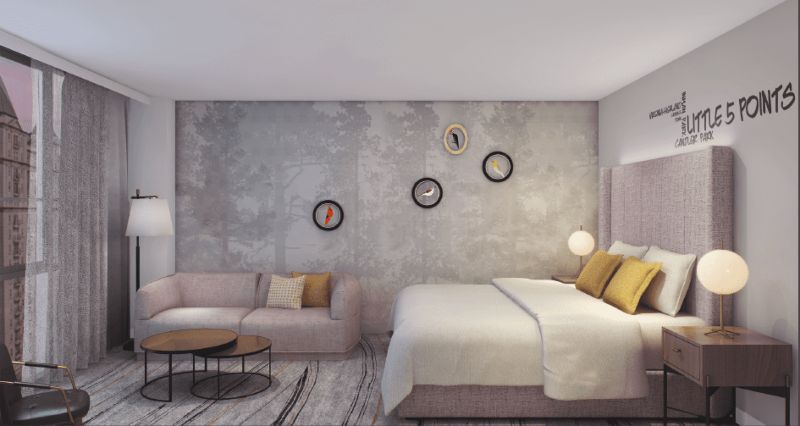
The Hotel W Atlanta Midtown, Atlanta, was designed by Virserius Studio after Gem Realty Capital Inc, Chicago, presented them with the project and, the Gonzalez Architects was asked to participate as a lead architecture firm.
See Also: Holloway Li – The Bermonds Locke Hotel in London
The W Atlanta Midtown Hotel is located in the business district and near the airport. It has a full-service spa, a restaurant and two bar/lounges, with 466, of which 33 suites, rooms featuring 24-hour room service.


The suites have everything needed to live it up like a VIP. Playful decor, bold colours, and city views set the stage to plan the next adventure. Soak up the Atlanta sun at WET, W Atlanta – Midtown’s rooftop pool, surrounded by relaxing chaise lounges, luxury private cabanas, and the poolside WET Bar.
Located in the city’s most electric neighbourhood, the W Atlanta luxury hotel is just a stone’s throw from amazing shopping and nightlife, as well as attractions like Piedmont Park and Ponce City Market.
See Also: Simeone Dreary Design Group, St. Jane Hotel Project in Chicago
Stay updated on more hospitality news by subscribing to our newsletter! For more luxury hotels, hospitality design and best hotel projects, don’t forget to visit our Pinterest and Facebook!

Enjoyed this article on Virserius Studio – The Hotel W Atlanta Midtown? Pin it!
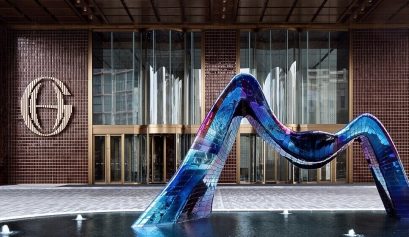
Yang Bangsheng and Associates Group is a renowned large-scale creative design enterprise, focused on designing interiors for high-end hospitality brands. The Group has headquarters in Shenzhen, China, and offices in New York and Paris. Yang Bangsheng and Associates Group was founded in 1997 by Mr Yang Bangsheng, a well-known hotel interior designer in the Asia Pacific.
It really is no wonder that Yang Bangsheng and Associates Group has a hotel listed for the Frame Awards 2021 – The Golden Eagle Hotel in Nanjing, China.
See Also: Simeone Dreary Design Group, St. Jane Hotel Project in Chicago
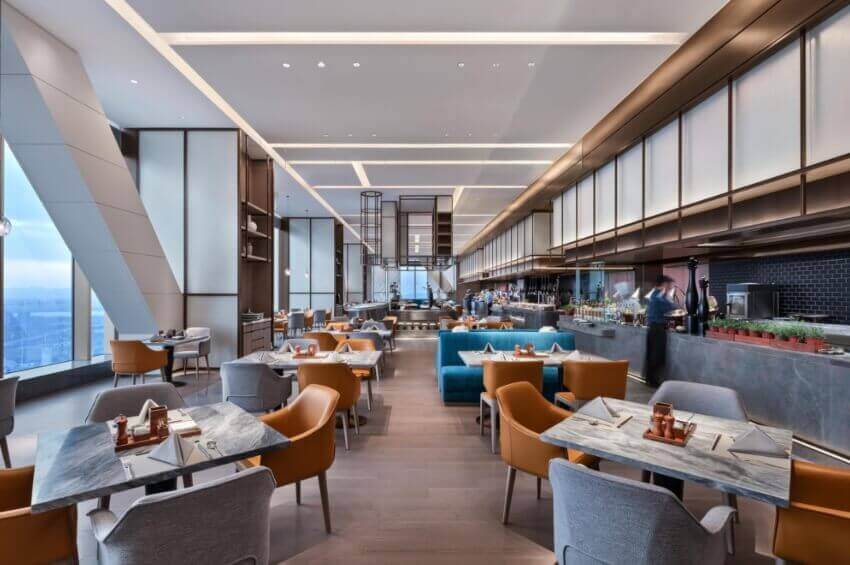
The Golden Eagle Hotel is located at the top of the world’s highest three-tower building in Nanjing and is also Asia’s largest commercial complex. In line with the artistic level of the landmark, it stands at a height of 368 meters to present a top-class luxury and fashionable lifestyle.


The interior design team define ‘trend’ as the establishment of common cultural cognition beyond sensory stimulation. With this design philosophy, the Yang Bangsheng and Associates Group’ designers combine Nanjing’s profound history and culture with a modern trendy lifestyle to create a brand-new upscale and stylish hotel in China.
The winding Qinhuai River has witnessed the glamour and prosperity of the city and nurtured countless backbone talents for the country. It is the most charming scenery of Nanjing as well as the source of inspiration for YANG’s design in the stylish and luxury Golden Eagle Hotel. From the profound history of Nanjing, the designer team extracts Qinhuai Culture as the design theme, which corresponds to the brand’s DNA of fashion, vitality and freedom. Modern design approaches applied in the space allow elements from both past and present to echo, mix yet collide and challenge with each other, creating a new experience of life.
INSPIRED BY THE LOOK – OREAS ARMCHAIR
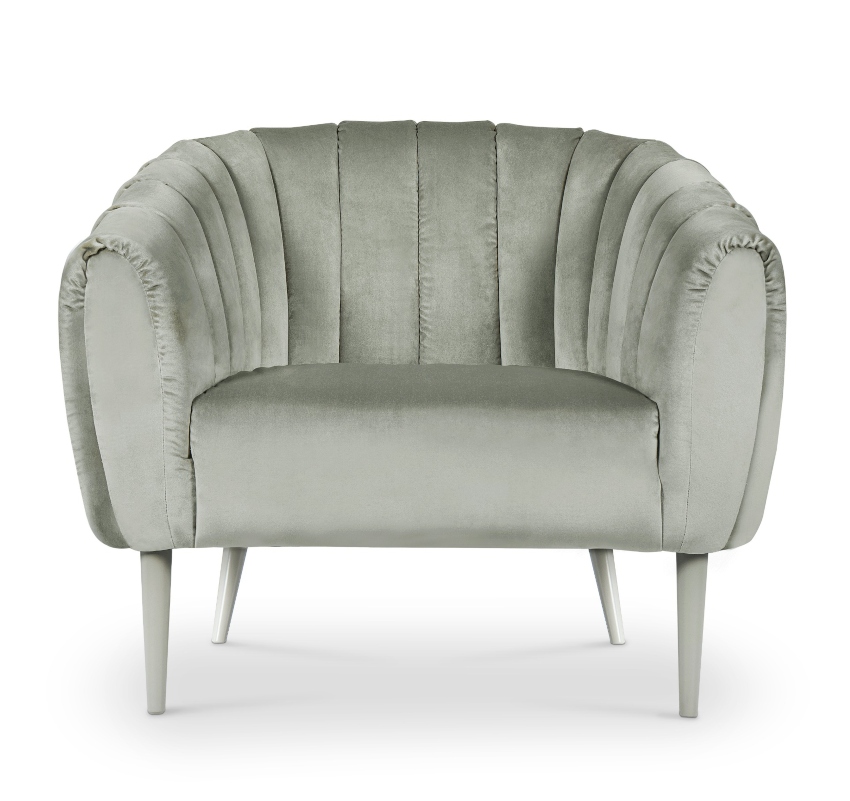
INSPIRED BY THE LOOK – OREAS ARMCHAIR
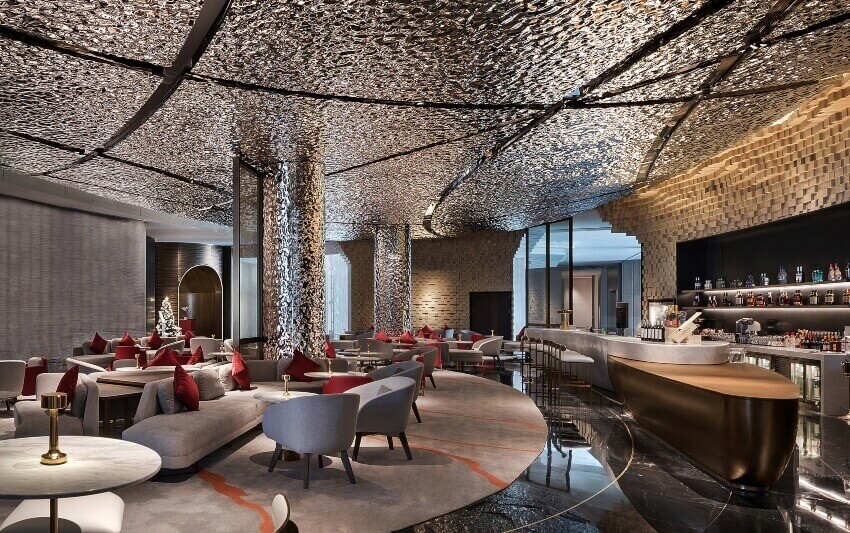
For cultural expression, the design mixes historical elements with modern art to evoke emotional resonance other than sensory stimulation. Examples include the shape of ancient city walls being reflected in the copper gates of the elevator hall, and the texture of them being translated into the massive metal frames at the lobby lounge, recalling old times and ancient culture in a modern space.
See Also: Holloway Li – The Bermonds Locke Hotel in London
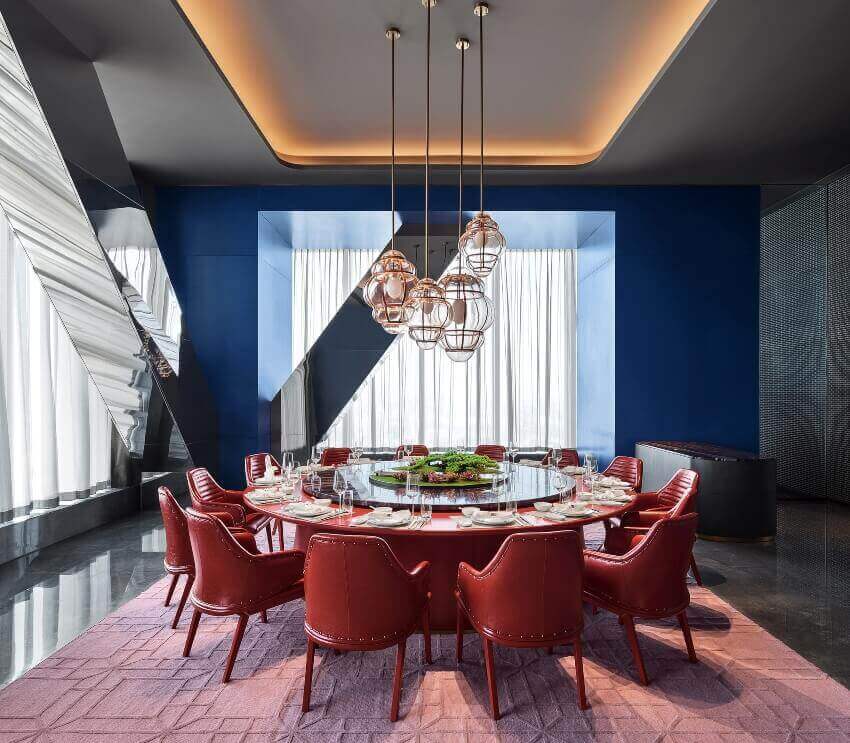

Through modern materials and technology, the glinting ripples on Qinhuai River are extracted as an element adorning the exhibition atrium and lobby lounge, which delivers an elegant yet fashionable feel, whereas the shape and colour of Yuhua Stone (a local speciality) are applied in furniture, carpet and throw pillow, making the space feel carefree while vibrant. The sky loggia connecting the three towers is transformed from a public corridor into an exhibition atrium plus lobby lounge, which effectively uses the space and enriches hotel functions as well.


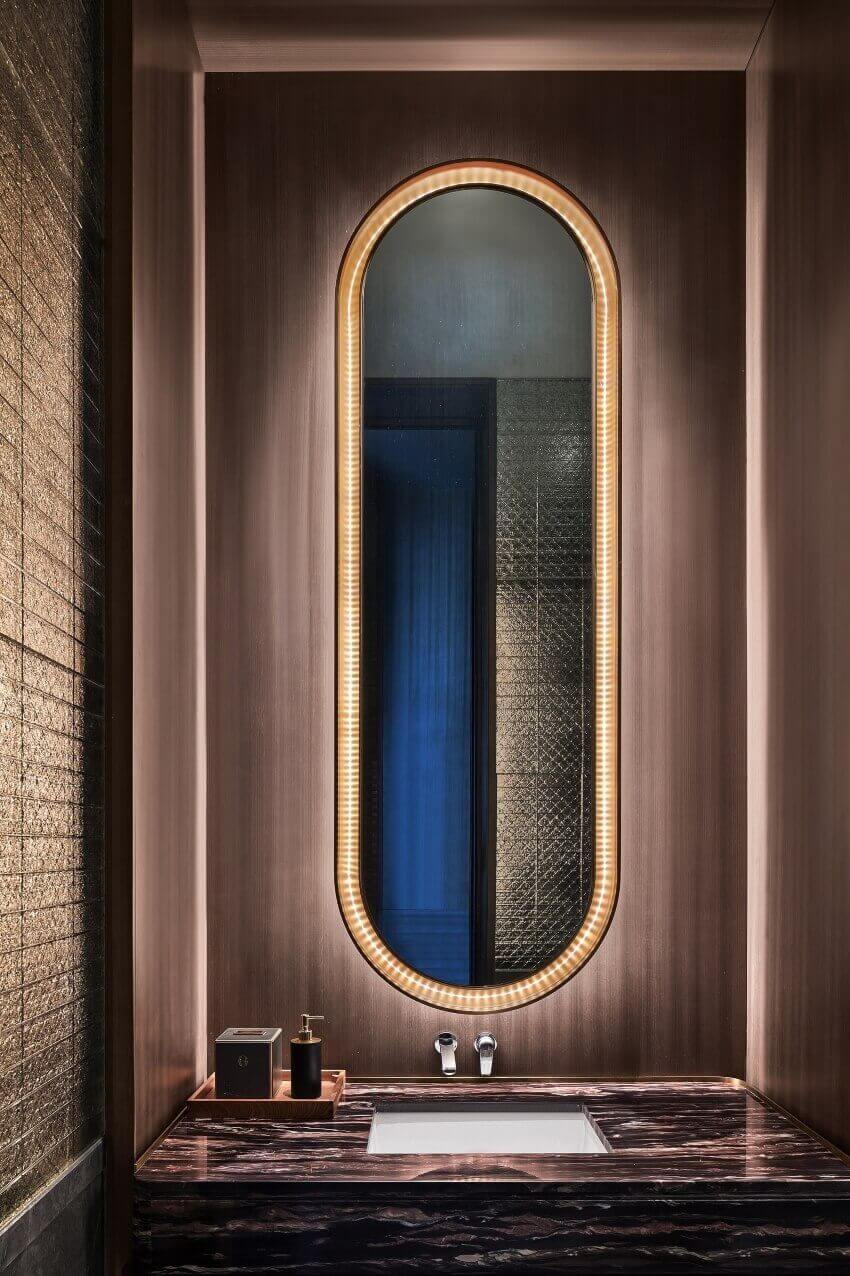
INSPIRED BY THE LOOK – COLOSSEUM OVAL MIRROR

INSPIRED BY THE LOOK – COLOSSEUM OVAL MIRROR
The five-storey-high exhibition atrium is also a lift hall. The back of the lift shaft, directly reaching the sky lounge at the 55th floor, is equipped with a 13-meter LED screen to make the hall a pre-function area for the adjacent multi-media centre, enabling guests to experience open-style exhibitions or launch events. In the lobby lounge, guests enjoy sufficient circulation and novel F&B experience thanks to the half-open wall facing the corridor.
To find out more about Yang Bangsheng and Associates Group and their amazing projects, check their website here!
See Also: Conran and Partners – The Maximilian Hotel in Prague, Czech Republic
Stay updated on more hospitality news by subscribing to our newsletter! For more luxury hotels, hospitality design and best hotel projects, don’t forget to visit our Pinterest and Facebook!

Enjoyed this article on Yang Bangsheng and Associates Group, The Golden Eagle Hotel? Pin it!
Simeone Dreary Design Group, founded in 2002, has made over 100 hotel projects including new constructions, renovation and conversion for various brands including Hilton Hotels, Loews Hotels, Marriott International, Starwood Hotels and Resorts, White Lodging, the Marina Bay Sands Corporation and First Elysian Hotel Company LLC.
Simeone Dreary Design Group design’s philosophy rests solely on the belief that there is no substitute for great design. Uncompromised artistry is the core mission of the firm, and although the mediums may differ, adherence to developing a conceptual vision for each project serves as a driving force in everything they create.
See Also: Holloway Li – The Bermonds Locke Hotel in London

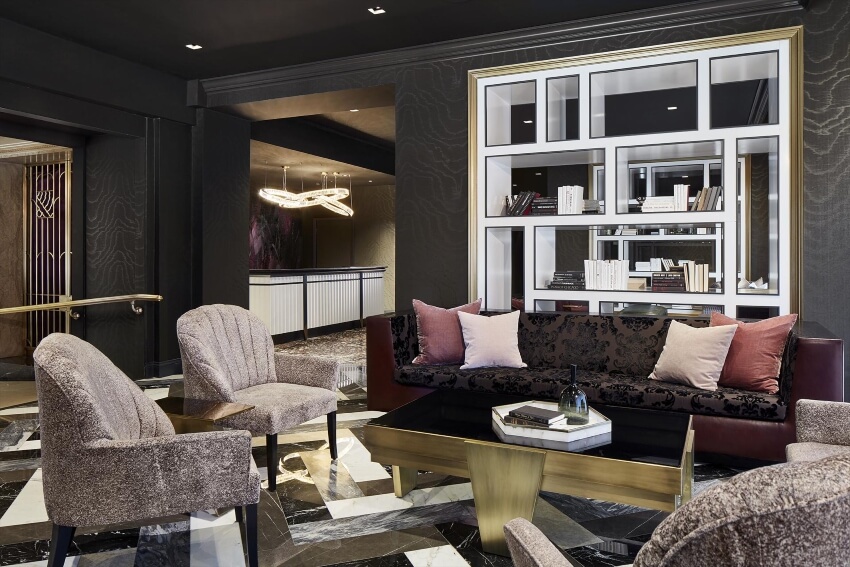
INSPIRED BY THE LOOK – NUKA ARMCHAIR
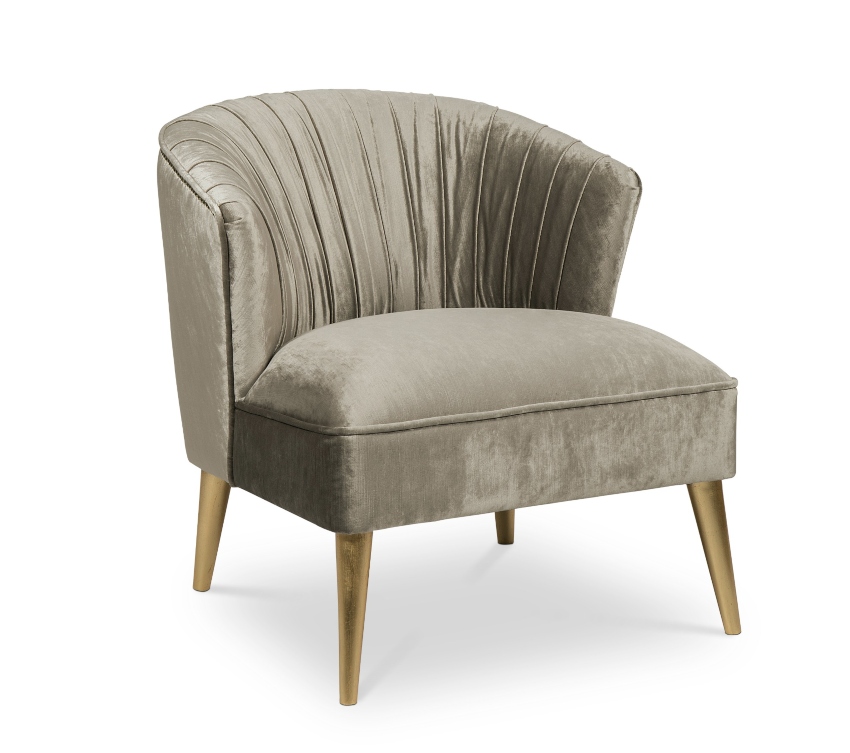
INSPIRED BY THE LOOK – NUKA ARMCHAIR
St. Jane Hotel was designed by the award-winning design firm Simeone Dreary Design Group. Located in Michigan Avenue, Chicago, Illinois, this hotel strives to be a stomping ground of all tastes. Their varied and multifunctional spaces possess their own vibe and experience and still be capable of having a unified purpose: to bring together people and cultures, to create a common ground for the uncommon.


St. Jane Hotel is located right at the heart of the Michigan Avenue, so when walking out of the room, one is just minutes away from enjoying Chicago’s Magnificent Mile attractions, fine dining and local events.
See Also: Conran and Partners – The Maximilian Hotel in Prague, Czech Republic
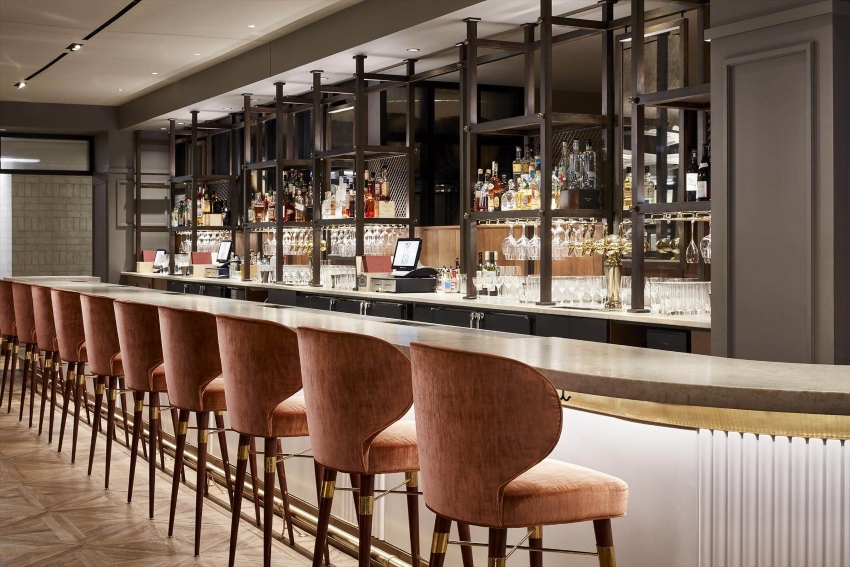
INSPIRED BY THE LOOK – NUKA BAR CHAIR
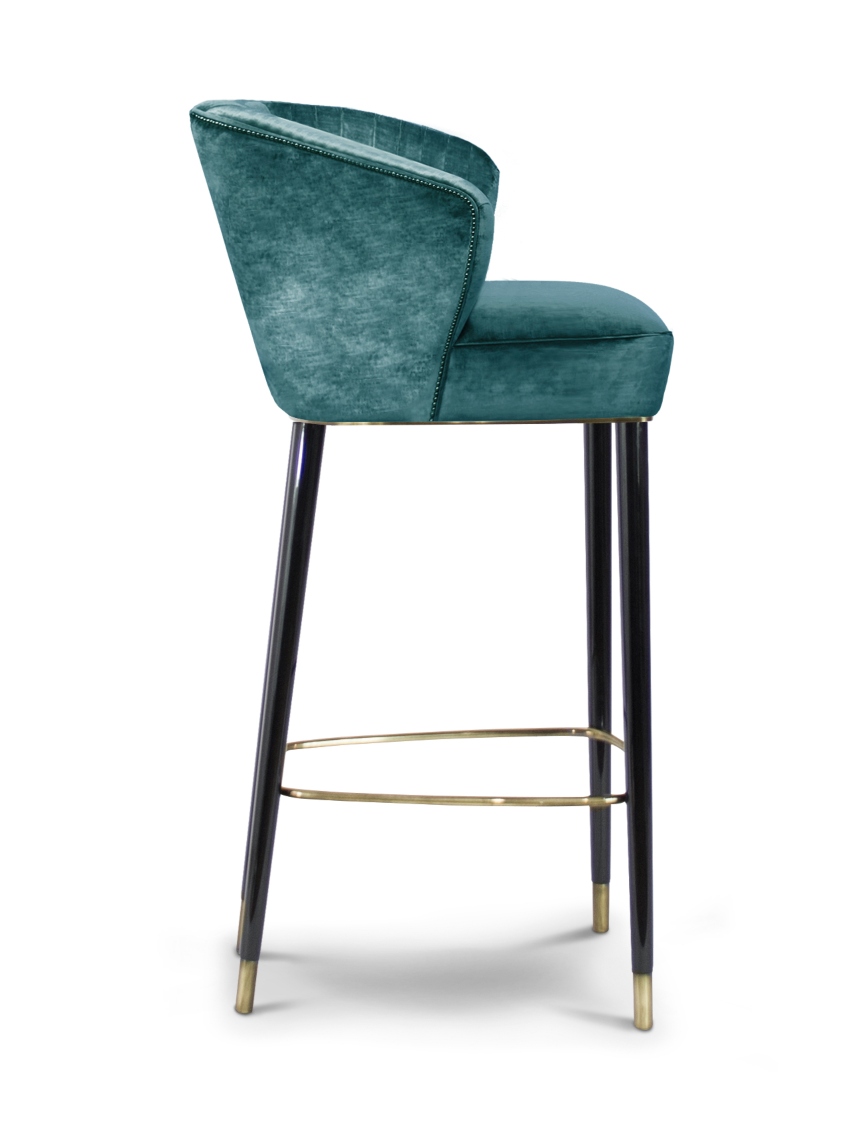
INSPIRED BY THE LOOK – NUKA BAR CHAIR

The hotel staff can help in tailoring the trip, find undiscovered gems and provide directions to the best attractions around Chicago. The unique history behind the hotel building’s, bold art deco styles and attention to detail come together to bring together a luxury experience never encountered before.

INSPIRED BY THE LOOK – TACCA CENTRE TABLE
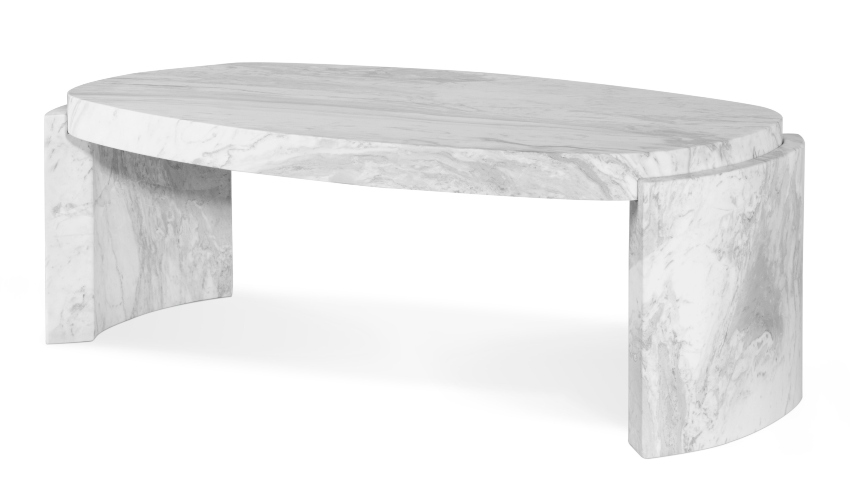
INSPIRED BY THE LOOK – TACCA CENTRE TABLE

St. Jane Hotel’s building is a historical landmark: the Carbide and Carbon Building was originally built as the regional headquarters and showcase for Union Carbide. It was completed in 1929 by the Burnham Brothers, sons of the influential Chicago architect Daniel Burnham. The building’s shape and colour are said to be inspired as a response to the time of Prohibition.


See Also: The Brit List Awards 2020, The Most Anticipated List and Event is Here
Stay updated on more hospitality news by subscribing to our newsletter! For more luxury hotels, hospitality design and best hotel projects, don’t forget to visit our Pinterest and Facebook!

Enjoyed this article on Simeone Dreary Design Group, St. Jane Hotel Project in Chicago? Pin it!
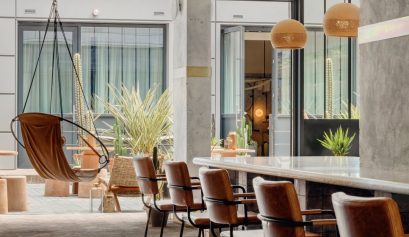
Holloway Li is a design consultancy firm established in London. The firm provides innovative architecture and interior design direction to a growing network of international clients across retail, hospitality and private residential sectors.
Holloway Li specialises in the hospitality industry, operating at the forefront of a new wave of designers who blur the boundaries between historicism, decoration, and digital process, to create intricate interiors that are comfortable in the context of contemporary design culture. So it is no wonder the studio was asked to design the Berdemonds Locke Hotel in London.
See Also: Hotel Interiors: Inspirational Designs and Ideas for Your Projects
Mirage-like mirrored ceilings and cacti-filled planters are some of the features that interiors studio Holloway Li has incorporated in this hotel in London, which is meant to echo California deserts. The Bermonds Locke Hotel is located at the heart of southeast London’s Bermondsey neighbourhood, just a few minutes walk from notable landmarks such as The Shard and Tower Bridge.


Despite the hotel’s markedly urban setting, when it came to designing its communal areas and 143 guest rooms, Holloway Li took inspiration from sun-scorched places in California like the Mojave Desert and Joshua Tree National Park. The theme is subtly introduced in the hotel’s reception where mirrors have been used to line sections of the ceiling, mimicking the shiny quality of desert mirages, which are often mistaken for bodies of water.
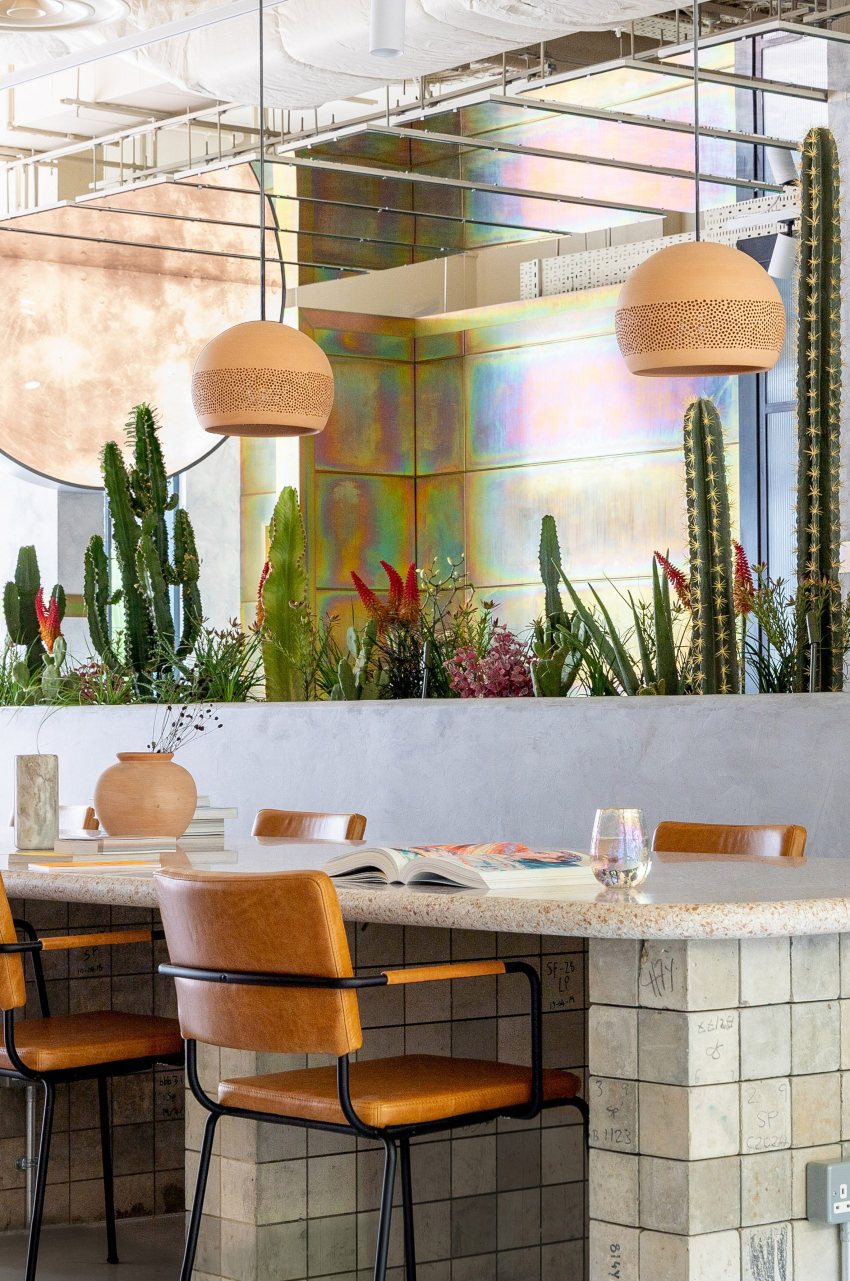

A white, mottled semi-circular panel has been fitted to the ceiling directly above the concierge counter, its reflection forming a huge moon-like image. Surrounding surfaces have been largely rendered with neutral materials like clay bricks and timber that the studio felt matched the desert landscape. This excludes a handful of walls and structural columns that are clad with passivated zinc, which boasts a rainbow-coloured surface finish.
See Also: The Brit List Awards 2020, The Most Anticipated List and Event is Here


A variety of seating areas have also been incorporated in Bermonds Locke‘s reception so that it can serve as a co-working space. Where possible, the studio has tried to repurpose construction materials that otherwise would have been destined for landfill, influenced by the ad-hoc building methods used when creating cabins across Joshua Tree. For example, salvaged concrete test cubes have been used to form the base of a six-metre-long terrazzo desk. The cubes are covered with pre-used tiles, some of which are still marked with graffiti.


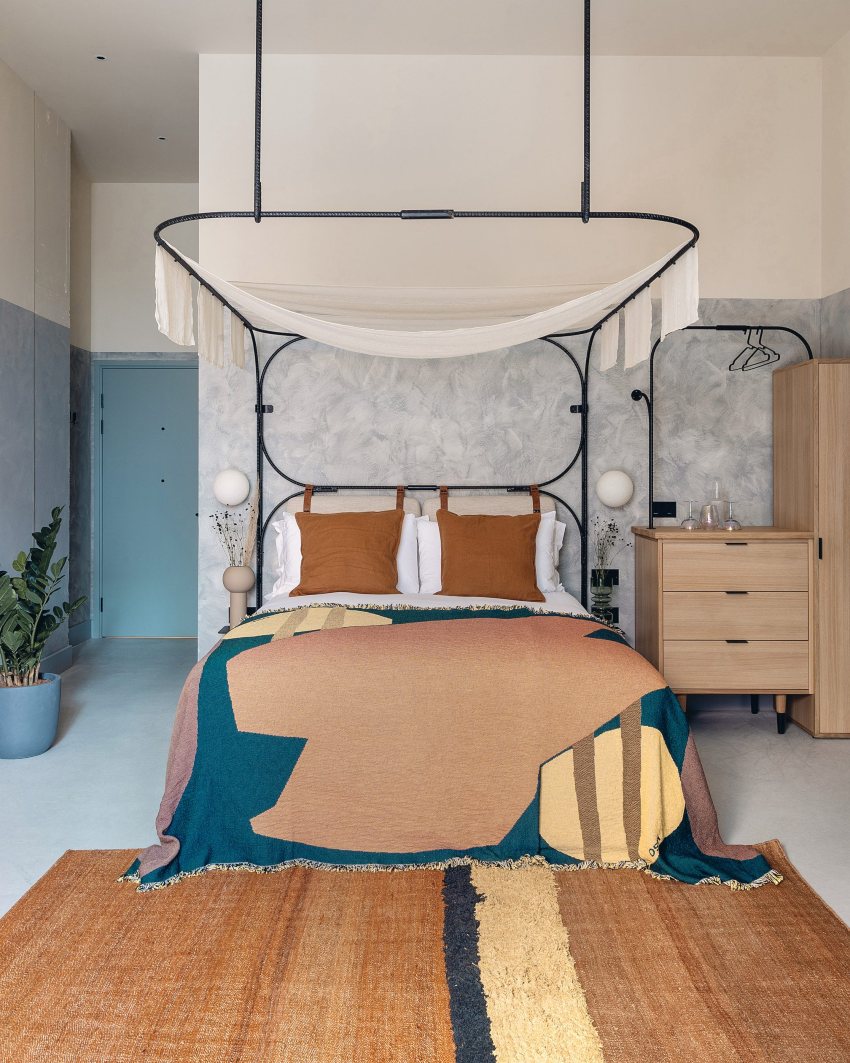
In another nod to hot, arid landscapes, huge planters filled with different cacti and succulents have been added throughout the hotel’s reception and used to separate its cocktail bar from the restaurant. Bermonds Locke‘s upper floors play host to the guest suites. Each one comes complete with its own kitchenette and laundry facilities, allowing guests to stay self-sufficiently in their rooms for longer periods of time. Fixtures and soft furnishings have been made in colours evocative of desert sunsets, ranging from pale blues to burnt oranges and vivid reds. The focal point of each room is the bed, which is enclosed by a bespoke black frame draped with sheets of linen.
To find you more about Holloway Li and their projects, check their website here!
See Also: Conran and Partners – The Maximilian Hotel in Prague, Czech Republic
Stay updated on more hospitality news by subscribing to our newsletter! For more luxury hotels, hospitality design and best hotel projects, don’t forget to visit our Pinterest and Facebook!

Enjoyed this article on Holloway Li? Pin it!
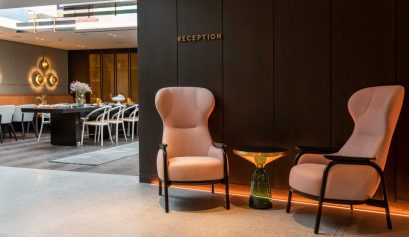
Conran and Partners is an interior and architecture design studio practice founded by Sir Terence Conran who is renowned for designing contemporary ways of living. The studio has offices in London, Hong Kong and Brighton, and their portfolio extends around the world, embracing a rich and varied range of typologies and scales.
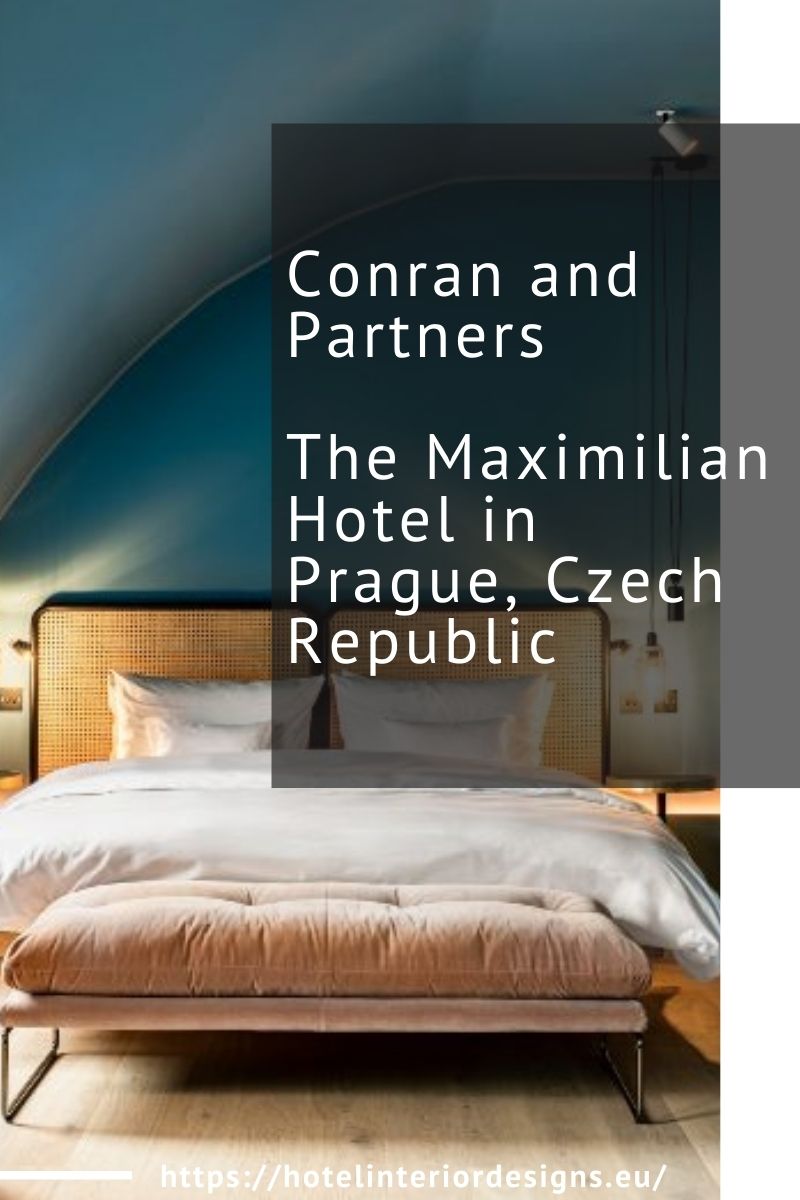
The firm was asked to refurbish The Maximilian Hotel, in Prague. The Hotel was open in 1995 by Christian and Rudolf Ploberger, and the make-over covered not only the 71 guest-rooms but also reconfiguring the existing ground floor areas to accommodate new public spaces which include a café and bar – at the hotel’s main entrance -, a brasserie (French-style restaurant) within the living room hub at the heart of the hotel, a library and space just for events with the courtyard garden, alongside with a full renovation of the basement spa.
See Also: The Incredible Furnas Boutique Hotel in the Azores


INSPIRED BY THE LOOK – CLERK ARMCHAIR

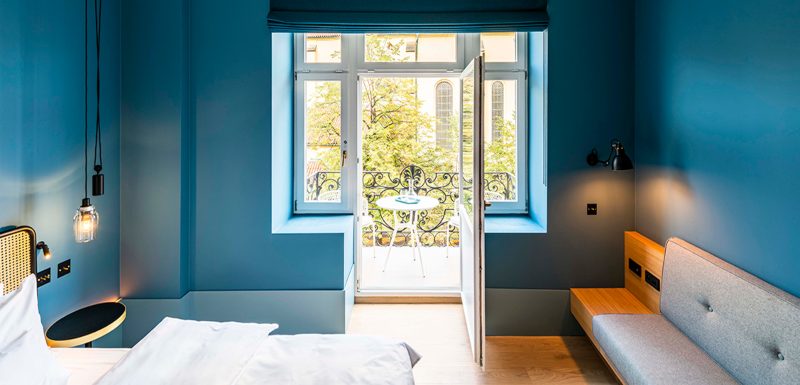
The Ploberger brothers (who also own the Hotel Josef in Prague), wanted to use the refurbishing as an opportunity to create contrast with the Hotel Josef’s starker iconic style and the Hotel Maximilian’s softer, colourful and more playful style. The design approach for the Maximilian was to reflect the cultural and architectural heritage of the urban context, with a nod to the Czech Modernism.


INSPIRED BY THE LOOK – TACCA CENTRE TABLE

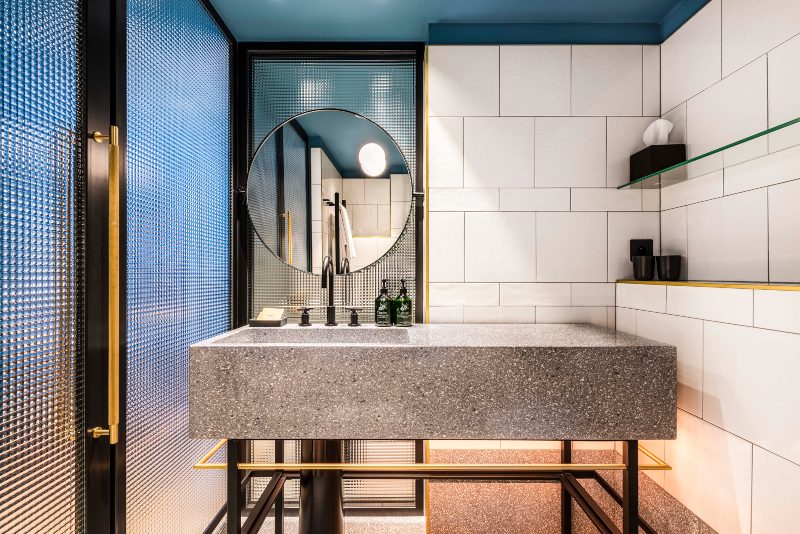
The hotel’s different areas are highlighted in a different pastel tone as a reference to the colourful architecture of Prague’s inner city. The colours range from light green tones on the entrance to pink in the historic stairwells and deep blue for the guestrooms. The furniture is a careful selection of contemporary and classic products in similar soft shades.
See Also: Hotel Interiors: Inspirational Designs and Ideas for Your Projects

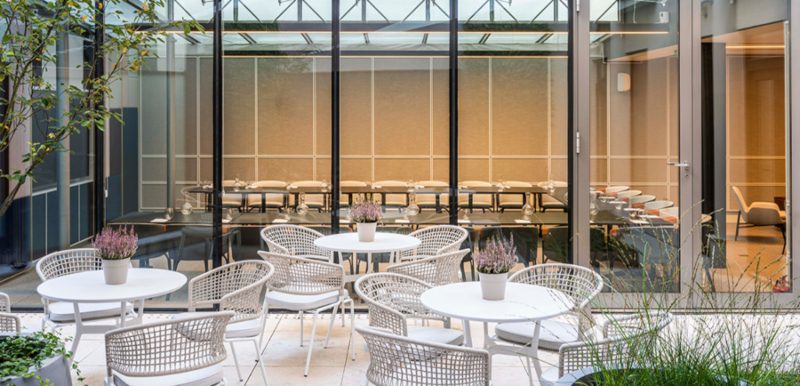
Bespoke lighting elements feature through the public areas and a contemporary chandelier crafted with handmade Czech glass was created for the living room and library. The basement spa has been optimised and refreshed with the use of gentle pastel colours, artwork murals by local design company Lavmi, and warm ambient lighting to promote relaxation.

The Hotel Maximilian is located on Hastalská Street, close to Prague’s Old Town Square, and won the Frame Award for Hotel of the Year in 2019.
Conran and Partners have shared expertise that covers and integrates both architecture and interior design. Their work fans out in many different sectors, ranging from individual restaurants to entire hotels, residential buildings, designing for all market levels and highly-layered regeneration projects – the company offers an added-value through a versatile and coherent approach to design.

INSPIRED BY THE LOOK – NIKU PENDANT LIGHT

See Also: The Brit List Awards 2020, The Most Anticipated List and Event is Here
Stay updated on more hospitality news by subscribing to our newsletter! For more luxury hotels, hospitality design and best hotel projects, don’t forget to visit our Pinterest and Facebook!
Enjoyed this article on Conran and Partners? Pin it!

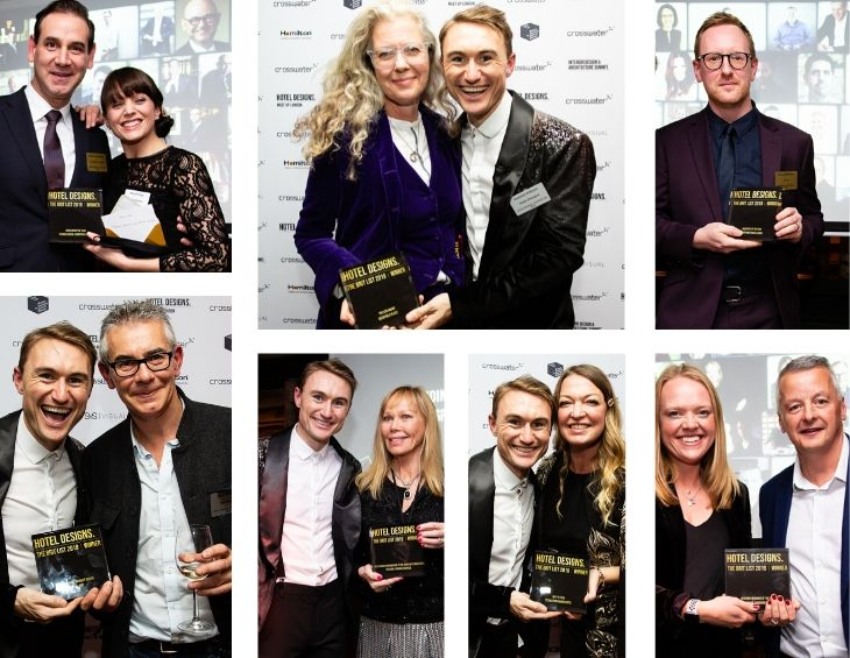
The Brit List Awards 2020 is the most widespread list in the hospitality world to identify the leading designers, architects, hoteliers and suppliers. The finalists have been invited to attend The Brit List Awards’ annual award ceremony, which is taking place virtually on November 12th.
At the event, The Brit List 2020 – a publication that profiles the top 25 designers, architects and hoteliers, as well as the individual winners, will be announced. In addition, Hotel Designs is hosting a ‘Winners’ Party’ for the industry on January 28, 2021, which will be aptly sheltered inside Minotti London’s Fitzrovia showroom.
See Also: The Sophisticated André Latin Hotel Interior Design In Paris

Now in its fourth year, The Brit List Awards is Hotel Designs’ the nationwide search to find the most influential designers, architects, hoteliers and suppliers operating in Britain. This year’s meticulous process began months ago when Hotel Designs opened up nominations and applications to its loyal readers.

Since then, an independent panel of expert judges gathered to discuss and select this year’s individual award winners and also to confirm the 75 individuals who have made it into The Brit List 2020. “Now more than ever, we should recognise and celebrate the leading individuals who are consistently and meaningfully at the forefront of British design, architecture and hospitality,” said editor Hamish Kilburn.
“Although, on record, 2020 has been one of the most challenging periods for the industry, I have faith that the individuals we have shortlisted, together, have the skills and experience to create meaningful solutions for hospitality and hotel design in the post-pandemic world.”
See Also: The Incredible Furnas Boutique Hotel in the Azores
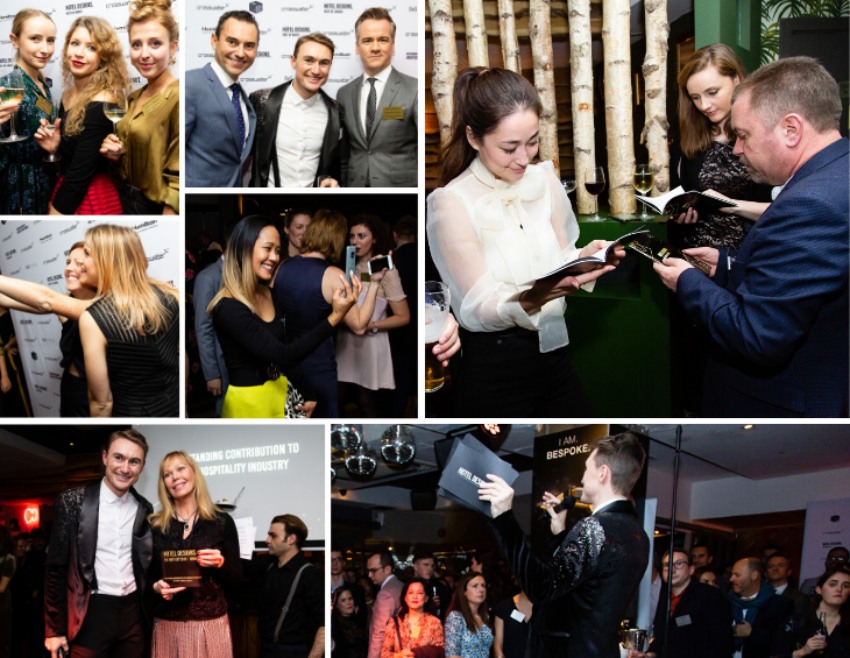
Adding an extra layer to this year’s event will be the currently confirmed 2020 sponsors and partners. They are – Crosswater (Headline Partner), Hamilton Litestat (Event Partner), Duravit (Event Partner), Aqualisa (Award Partner), Hansgrohe (Award Partner), Schlüter Systems (Showcase Partner), British Institute of Interior Design (Industry Partner), HIX (Networking Partner).

See Also: Hotel Interiors: Inspirational Designs and Ideas for Your Projects
%20(1).jpg)
For more luxury hotels, hospitality design and best hotel projects, don’t forget to visit our Pinterest. Stay updated on more hospitality news by subscribing to our newsletter!

Enjoyed this article on The Brit List Awards 2020? Pin it!